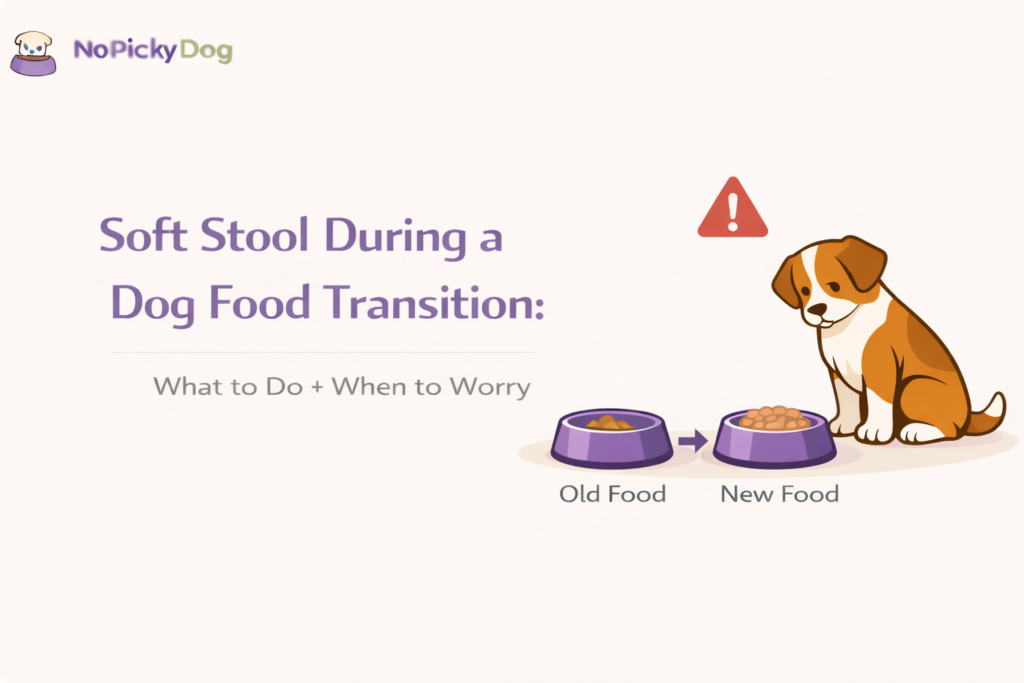
If your dog gets soft stool after switching foods (kibble to fresh, new kibble brand, new protein, new toppers), you’re not alone. A diet change is one of the most common triggers for sudden loose stool.
The goal is not to “panic-switch” again. The goal is to protect hydration, slow the transition, remove extra variables, and decide whether this is a simple adjustment or a vet situation.
When to worry (vet red flags)
Contact a veterinarian promptly if soft stool or diarrhea comes with any of the following:
Vomiting (especially repeated)
Blood in stool (red or black/tarry)
Lethargy, weakness, collapse
Refusing water or signs of dehydration (dry gums, sunken eyes)
Severe diarrhea (very frequent, watery, or large volume)
Puppy, senior dog, or dog with chronic conditions
Diarrhea lasting more than 48 hours, or worsening instead of improving
Authoritative references:
Diarrhea in Dogs (VCA Hospitals)
Diarrhea (Cornell University College of Veterinary Medicine)
Dog Diarrhea: Signs, Symptoms, and Treatments (AKC)
If none of the red flags apply and your dog seems normal otherwise, keep reading.
Quick answer (what to do today)
Most soft stool during a food transition comes from one of these buckets:
The change was too fast (gut bacteria need time to adapt)
Too many “extras” were added at once (toppers, treats, chews, table scraps)
Portions crept up (your dog is getting more total calories than before)
The new food is richer (higher fat, different fiber, new protein)
Stress + diet change together (boarding, travel, schedule changes)
Today’s plan is simple: slow down, simplify, and stabilize for 24–72 hours.
Step-by-step plan (do this in order)
Step 1: Stop adding variables (for 3 days)
For the next 72 hours, remove these common “hidden triggers”:
New treats or higher treat volume
Chews (especially rich or long-lasting chews)
Table scraps
New toppers
Multiple protein changes at the same time
Keep training rewards tiny and away from meals, or pause treats briefly if you can.
Step 2: Slow the transition (use the 3-2-1 rule)
If you’re mid-transition, don’t keep pushing forward.
Use this safe slowdown template:
3 days: 90% old food + 10% new food
2 days: 80% old + 20% new
1 day: re-check stool before moving again
If stool firms up, move to the next step slowly (see the 7-day transition plan below).
If stool gets worse, stay at the last “good” ratio and call your vet if needed.
Step 3: Confirm portions (overfeeding is the quiet cause)
When stool softens during a switch, many owners accidentally increase total calories:
new food is denser, plus toppers, plus “make-up” treats.
If you’re not measuring, start measuring today.
If you need a fast portion setup, use this guide:
Portion Basics: How Much to Feed a Picky Dog (Without Guessing)
Step 4: Keep meals boring and consistent (short bowl window helps)
If your dog is picky and you keep offering new options, the stomach often gets worse.
Pick two meal times.
Put food down for 10–15 minutes, then pick it up.
No upgrades after refusal.
Step 5: Hydration check (the most important safety step)
Soft stool becomes dangerous when dehydration starts.
Quick at-home checks:
Gums should feel moist, not tacky or dry
Your dog should be drinking normally
Energy should be close to normal
If your dog won’t drink, seems weak, or looks dehydrated, stop the plan and call a vet.
Step 6: If stool is watery, consider a short “gut reset” (vet-guided)
Some dogs improve with a temporary highly digestible approach (a “bland” plan), but puppies/seniors/medical dogs should not fast or change abruptly without vet guidance.
If diarrhea is mild and your dog is otherwise normal, many vets recommend small, frequent, easy-to-digest meals for a short period, then a slow return to the transition schedule.
If you’re unsure, call your vet first—especially if symptoms last more than 48 hours.
Step 7: Rebuild the transition slowly (7-day plan)
Once stool is stable for 48 hours, restart with a slow transition:
Days 1–2: 90% old + 10% new
Days 3–4: 75% old + 25% new
Days 5–6: 50% old + 50% new
Day 7+: 25% old + 75% new (only if stool stays stable)
If stool softens again, go back to the last stable ratio and hold for 2–3 more days.
Common mistakes that make soft stool worse
Switching foods again immediately (“panic-switching”)
Adding probiotics + toppers + treats all at once (too many variables)
Overfeeding to “make up” for skipped meals
Moving the transition ratio every day without checking stool stability
Letting chews and treats replace real meals
What soft stool is telling you (simple interpretation)
Soft but formed stool for 1–2 days, dog is normal: usually transition speed/extra calories.
Watery diarrhea, frequent, or worsening: treat as higher risk and call your vet.
Blood, vomiting, dehydration, lethargy: urgent vet call.
Next steps
If picky eating is the bigger issue, follow the full plan: How to Fix a Picky Eater Dog Fast: A 7-Day Plan That Works
If you’re switching foods because your dog refuses kibble but eats treats, fix the pattern first: Dog Won’t Eat Kibble but Eats Treats? Fix It (7-Step Plan)
If portions and treat calories might be the cause, use this guide: Portion Basics: How Much to Feed a Picky Dog (Without Guessing)
Hub page: Dog Food & Safety Guides
Hub page: Fix Picky Eating Fast