If your dog eats only once a day, it’s easy to feel guilty—or worry you’re doing something “cruel.” The truth is: once-a-day feeding isn’t automatically cruel. What matters is whether your dog is healthy, hydrated, maintaining weight, and getting the right calories (without treats quietly replacing meals).
This guide helps you decide what’s normal, what’s not, and what to do today—without overreacting or constantly switching foods.
Quick answer (what to do today)
Can you feed a dog once a day? Sometimes, yes—but it depends on your dog’s age, health, total daily calories, and whether appetite changes are new.
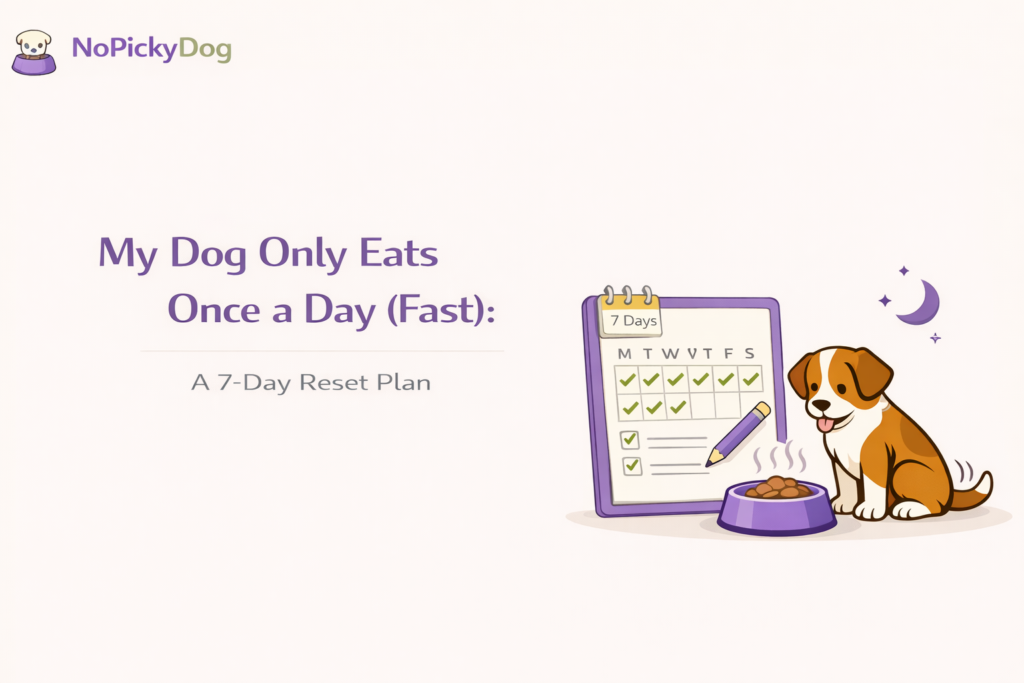
Do this today (simple reset for the next 7 days):
- Set two meal times (example: 8am and 6pm) even if your dog usually eats once.
- Put food down for 10–15 minutes, then pick it up calmly. No grazing.
- No “upgrades” during the reset: no toppers, no hand-feeding, no switching foods in the moment.
- Measure portions (many “picky” dogs are simply not hungry). Use: Portion Basics: How Much to Feed a Picky Dog (Without Guessing)
- If your dog is refusing breakfast but eats later, read: Dog Won’t Eat Breakfast but Eats Dinner? Is It Normal + What to Do
- If your dog refuses meals but eats treats, use: Dog Won’t Eat Kibble but Eats Treats? Fix It (7-Step Plan)
- If you see red flags, skip “training through it” and contact a vet.
- If you’re not sure about the schedule (not just once-a-day), use this simple routine guide first: Best Times for Dogs to Eat: Simple Feeding Schedules (Morning vs Evening)
- If you’re choosing once-a-day and the only time you can feed is at night, use this focused guide: Can I Feed My Dog Once a Day at Night? When It’s OK + When to Worry
Steps (when once-a-day is OK vs when it’s a problem)
Step 1) First, rule out “this could be medical”
Once-a-day feeding is only “OK” if your dog is otherwise well. Check:
- Normal energy and behavior
- Drinking water normally
- No repeated vomiting/diarrhea
- No signs of pain
- No rapid weight loss
If you’re unsure, start here: Dog Not Eating But Acting Normal? 11 Common Causes + What to Do
And keep this safety guide handy: How Long Can a Dog Go Without Eating? Safe Limits + When to Worry
Step 2) The #1 hidden cause: they’re not actually hungry (treats + portions add up)
A lot of “only eats once a day” dogs aren’t stubborn—they’re full. Common culprits:
- Training treats that quietly stack up
- Chews that function like a small meal
- Portions that are larger than needed for activity level
Fix the math first (without guessing): Portion Basics: How Much to Feed a Picky Dog (Without Guessing)
Step 3) Use a simple 7-day test (two meal times, no upgrades)
Even if you plan to feed once daily long-term, run this 7-day test first to remove confusion:
- Choose two consistent times (example: 8am + 6pm).
- Offer food for 10–15 minutes; pick it up.
- No toppers, no hand-feeding, no switching foods mid-meal.
- Keep treats/chews minimal during the test.
- Track stool, water, energy, vomiting.
If your dog’s refusal pattern improves, it was likely routine/behavior/calorie math.
If not, you’ll know it’s time to switch branches (see next steps).
If meals have become a daily battle, follow the full plan: How to Fix a Picky Eater Dog Fast: A 7-Day Plan That Works
Step 4) If you still want once-a-day feeding, pick the best timing (morning vs night)
Some owners prefer once-a-day feeding for schedule reasons. The best time depends on your dog’s routine and activity.
Use this guide for timing and tradeoffs: Best Time to Feed a Dog Once a Day (Morning vs Night) + Is It Cruel?
If your plan is one meal at night, here’s when it’s OK—and when it’s a bad idea (plus a safer evening window).
Step 5) If your dog only eats at night, treat it as a pattern—not a mystery
If your dog consistently ignores breakfast and only eats later, it’s usually one of these:
- Treats/chews replace morning appetite
- The dog has learned that waiting leads to “better options”
- Morning routine is stressful or too rushed
Start here for the “only eats once a day (often at night)” pattern: My Dog Only Eats Once a Day (Often at Night): Is It Normal + What to Do
Vet red flags (don’t wait)
Call a vet promptly if your dog has any of these:
- Repeated vomiting or inability to keep water down
- Bloody diarrhea or black/tarry stool
- Obvious pain, bloated abdomen, repeated gagging
- Severe lethargy, collapse, weakness
- Signs of dehydration (dry gums, sunken eyes, not drinking)
- Rapid weight loss or refusal to eat for 24 hours plus “not themselves”
- Puppies/small dogs that stop eating (higher risk)
Safety reference: How Long Can a Dog Go Without Eating? Safe Limits + When to Worry
Short medical disclaimer: This content is for informational purposes only and does not replace professional veterinary advice.
Next steps
Pick the path that matches your situation:
- Run the full picky-eating reset (7 days):
How to Fix a Picky Eater Dog Fast: A 7-Day Plan That Works - Fix portions/treat calories (most common):
Portion Basics: How Much to Feed a Picky Dog (Without Guessing) - If they skip breakfast but eat later:
Dog Won’t Eat Breakfast but Eats Dinner? Is It Normal + What to Do - If they only eat once a day (often at night):
Dog Eating Once a Day Only? Is It Normal + How to Fix It - If they refuse meals but eat treats:
Dog Won’t Eat Kibble but Eats Treats? Fix It (7-Step Plan) - If you’re worried it might be medical:
Dog Not Eating But Acting Normal? 11 Common Causes + What to Do - If mornings are the trigger:
Dog Not Eating in the Morning? 9 Common Causes + What to Do
Related guides
- Best Time to Feed a Dog Once a Day (Morning vs Night) + Is It Cruel?
- Dog Eating Once a Day Only? Is It Normal + How to Fix It
- Dog Won’t Eat Breakfast but Eats Dinner? Is It Normal + What to Do
- Portion Basics: How Much to Feed a Picky Dog (Without Guessing)
- How Long Can a Dog Go Without Eating? Safe Limits + When to Worry
Medical disclaimer: This content is for informational purposes only and does not replace professional veterinary advice.