Feeding time matters more than most people think—not because there’s one “perfect” hour, but because a predictable schedule helps appetite, digestion, and behavior stay stable. If your dog is skipping meals, eating only at night, or getting picky, the fastest fix is usually routine + portion clarity, not switching foods.
Not sure what to do today? Take the 30-second path: Path Picker (30-Second)
Quick answer
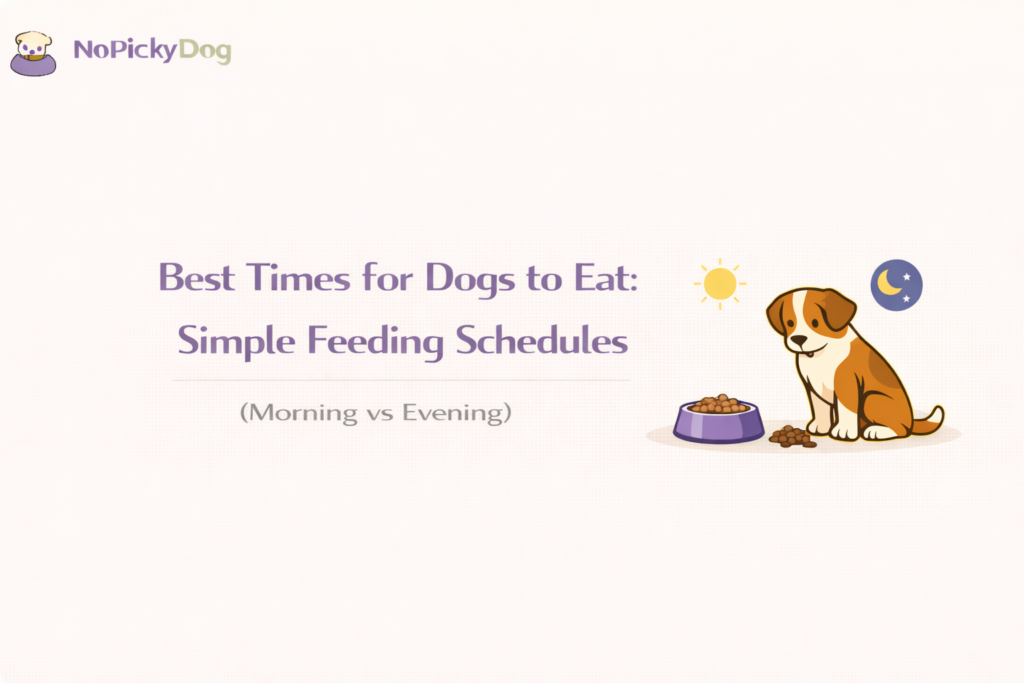
For most healthy adult dogs, the best feeding schedule is two meals a day—one in the morning and one in the early evening—spaced about 10–12 hours apart. Choose times you can keep consistent every day (that consistency matters more than the exact hour).
If your dog won’t eat breakfast but eats later, don’t “upgrade” the meal with toppers or hand-feeding—reset the routine first: Dog Won’t Eat Breakfast but Eats Dinner? Is It Normal + What to Do
If your main question is “can I feed my dog once a day at night?”, start here for a simple, safe decision guide: Can I Feed My Dog Once a Day at Night? When It’s OK + When to Worry
Steps
Step 1 — Pick a schedule you can follow every day
Use one of these simple templates:
Adult dogs (most common):
- 7–9 AM and 5–7 PM (two meals)
- Keep treats small and timed, so they don’t replace meals
Puppies (often need more frequent meals):
- 3–4 meals/day depending on age and your vet’s advice
(If your puppy is skipping meals or seems unwell, treat that as higher risk—see red flags below.)
Seniors or dogs with sensitive stomachs:
- Usually 2 meals/day still works best
- Some do better with smaller, more frequent meals—ask your vet if there’s a medical condition involved
If you’re choosing once-a-day feeding, read this first to avoid accidental underfeeding or treat-driven “false picky”: Should Dogs Only Eat Once a Day? Is It Cruel? When It’s OK + When to Worry
Step 2 — Use the “meal window” rule (10–15 minutes)
This single habit fixes a surprising number of “picky” cases:
- Put the meal down.
- Wait 10–15 minutes.
- Pick it up calmly (no drama, no bargaining).
- Next meal is at the next scheduled time.
This prevents grazing and retrains appetite to show up on schedule. If your dog is skipping mornings, start here: Dog Not Eating in the Morning? 9 Common Causes + What to Do
Step 3 — Stop treats from replacing meals (the hidden reason schedules fail)
A “perfect schedule” won’t work if treats/chews quietly replace calories. If your dog is motivated by treats but ignores meals, fix the math first:
- Use the 10% rule guide: Treats vs Meals: The 10% Rule (Stop Treats From Replacing Dinner)
- Then calculate a daily treat budget in seconds: Treat Budget Calculator (10% Rule)
Step 4 — Make sure portions match your schedule
Many dogs that “act picky” are actually in one of two situations:
- Overfed (not truly hungry at meal time), or
- Underfed / inconsistent (snacks fill gaps, then appetite gets weird)
If you want a simple way to convert calories into “how much to feed,” use: Portion Converter (kcal → cups/grams)
And for a practical, no-guessing portion baseline, use: Portion Basics: How Much to Feed a Picky Dog (Without Guessing)
Step 5 — If your dog only eats at night, check the common pattern
Dogs that eat only at night usually fall into one of these buckets:
- Too many daytime treats/chews (not hungry at breakfast)
- Learned “upgrades” (skipping leads to better options later)
- Timing mismatch (late-night snacks, late dinner, irregular routine)
- Mild nausea/stress that feels worse in the morning
Start with the simple schedule fix here: Best Time to Feed a Dog Once a Day (Morning vs Night) + Is It Cruel?
(External authority note) If you want a vet-backed framework for evaluating diet routines and nutrition basics, the WSAVA Global Nutrition Guidelines are a helpful starting point.
Vet red flags
Call a vet today (or urgent care) if your dog is not eating and any of these are true:
- Your dog won’t drink water, is very lethargic, or seems in pain
- Repeated vomiting/diarrhea, bloating, collapse, trouble breathing
- Black/tarry stool, blood in stool, fever
- Rapid weight loss, or your dog is a puppy, very small breed, senior, or has chronic disease
If your dog is not eating but otherwise acting normal, use this checklist before you change foods: Dog Not Eating But Acting Normal? 11 Common Causes + What to Do
Next steps
Pick the path that matches your situation:
• I’m not sure what to do today (fast):
Path Picker (30-Second)
• My dog skips breakfast but eats later:
Dog Won’t Eat Breakfast but Eats Dinner? Is It Normal + What to Do
• My dog eats once a day (is it OK?):
Dog Eating Once a Day Only? Is It Normal + How to Fix It
Should Dogs Only Eat Once a Day? Is It Cruel? When It’s OK + When to Worry
• Treats might be ruining meals (do the math):
Treat Budget Calculator (10% Rule)
Treats vs Meals: The 10% Rule (Stop Treats From Replacing Dinner)
• I want portion clarity (no guessing):
Portion Converter (kcal → cups/grams)
Portion Basics: How Much to Feed a Picky Dog (Without Guessing)
Medical disclaimer: This content is for informational purposes only and does not replace professional veterinary advice.
Related guides
Best Time to Feed a Dog Once a Day (Morning vs Night) + Is It Cruel?
Should Dogs Only Eat Once a Day? Is It Cruel? When It’s OK + When to Worry
Dog Not Eating in the Morning? 9 Common Causes + What to Do
Dog Won’t Eat Breakfast but Eats Dinner? Is It Normal + What to Do
Treats vs Meals: The 10% Rule (Stop Treats From Replacing Dinner)
Portion Basics: How Much to Feed a Picky Dog (Without Guessing)