It is a staple in every kitchen, and often used to wrap pills or cushion a swallowed bone. But is bread actually safe for dogs?
The answer is a split verdict: Baked bread is usually fine; Raw bread dough is a medical emergency.
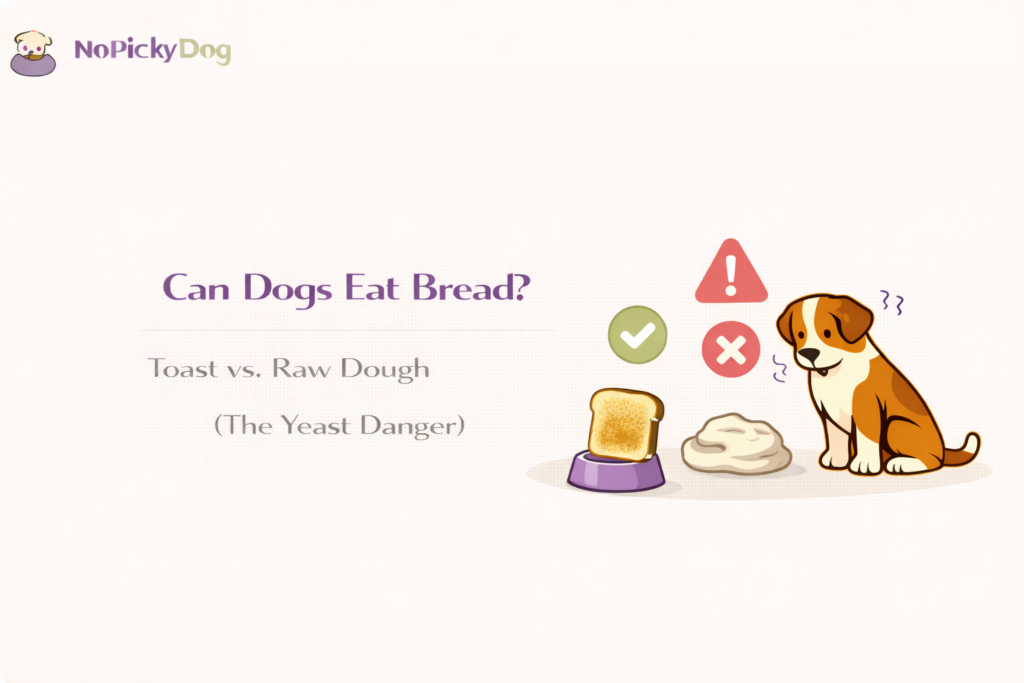
Here is the breakdown of when a slice of toast is a harmless treat, and when a ball of dough requires an immediate trip to the vet.
Quick Answer
Yes, dogs can eat plain baked bread in moderation. It is not "nutritious," but it is not toxic. It acts as a safe "filler" for upset stomachs or to buffer sharp objects (like bones).
NO, dogs cannot eat Raw Yeast Dough. This is critical. If your dog eats unbaked dough (bread, pizza, or cinnamon rolls), it creates two deadly reactions in the stomach: Expansion (Bloat) and Alcohol Poisoning.
Step 1: Why raw dough is an emergency
Unlike baked bread, raw dough contains active yeast. In the warm, wet environment of a dog's stomach, yeast does exactly what it does in a bowl: it rises.
1. The "Bloat" Risk (Gastric Dilatation) The dough can expand to many times its original size, stretching the stomach and potentially cutting off blood flow (GDV). This causes extreme pain and can rupture the stomach.
2. Alcohol Poisoning As yeast ferments, it produces ethanol (alcohol) as a byproduct. Dogs absorb this rapidly. A dog that eats dough can actually get severely "drunk," leading to seizures, respiratory failure, and coma.
Immediate Action: If your dog ate raw dough, call the vet immediately. Do not wait for it to rise.
Step 2: Safe Bread Rules (The "Ok" List)
If you are feeding BAKED bread (as a treat or medical aid), follow these rules:
- Plain White/Wheat: Safe.
- Toast: Safe (and often better for digestion).
- Garlic bread: the garlic is the problem, not the bread. (See Garlic Guide).
- Raisin bread: the raisins are the problem, not the bread. (See Raisin Guide).
- Banana Bread: Generally safe, but check for Xylitol or Chocolate chips.
Step 3: When to Use Bread as "Medicine"
Vets often recommend bread for two specific situations:
- The "Cushion" Method: If a dog swallows a sharp object (like a cooked chicken bone), bread wraps around the shards to protect the gut lining. Read the Chicken Bone Guide
- The Pill Pocket: A small ball of soft bread is an easy way to hide medication.(Cheese is another popular option for hiding pills. See which cheeses are safe here)
Sources
- ASPCA — People Foods to Avoid Feeding Your Pets: states that yeast dough can rise and cause gas to accumulate in a pet’s digestive system, that this can be painful and cause the stomach to bloat and potentially twist into a life-threatening emergency, and that the yeast produces alcohol as a by-product; also describes the effects of alcohol ingestion.
- If your dog ate RAW Yeast Dough: Go to the Emergency Vet immediately.
Medical disclaimer: This content is for informational purposes only and does not replace professional veterinary advice.