Eggs are cheap, easy to prepare, and a good source of protein — which is why they turn up in so many homemade toppers.
The question owners actually ask is narrower: raw or cooked, and are the shells safe?
Quick Answer
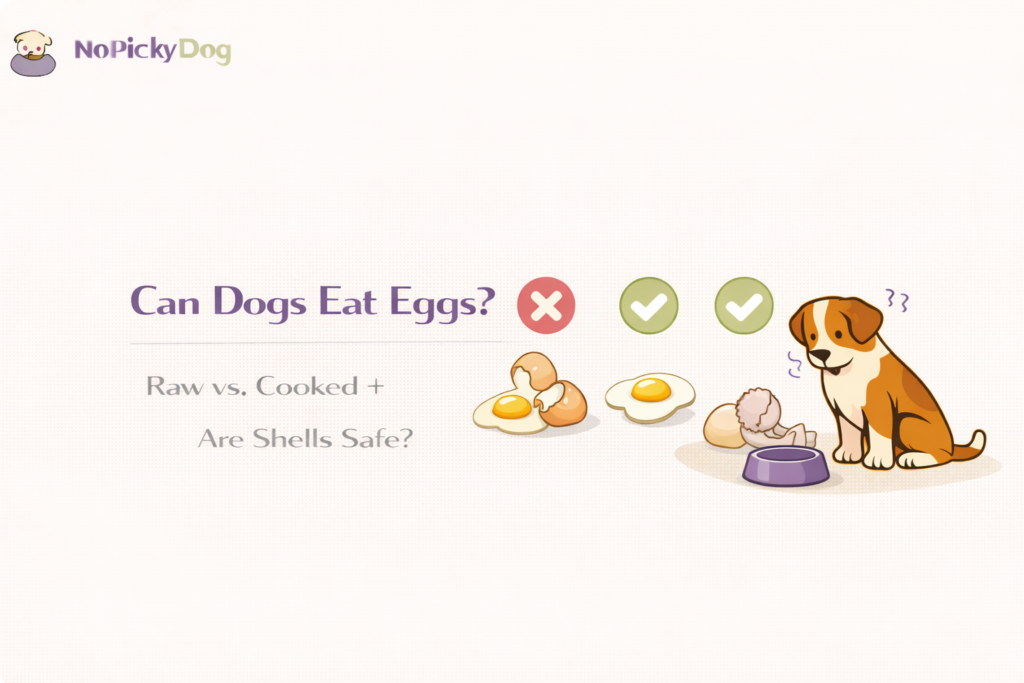
Yes, most dogs can eat plain eggs — and cooked is the safer choice.
- Cooked: plain scrambled or hard-boiled, with nothing added.
- Raw: carries two risks that cooking removes (below).
- Either way: eggs are an extra, not a meal. They still count toward the day's calories.
Step 1: Why raw eggs are the riskier option
The ASPCA's guidance on people foods covers raw eggs directly, and it names two separate problems.
- Bacteria. The ASPCA notes that raw meat and raw eggs can contain bacteria such as Salmonella and E. coli, and that these can be harmful to pets and people alike. That second half matters in a household: the risk is not only to your dog.
- Vitamin absorption. The ASPCA also notes that raw eggs contain an enzyme that can interfere with the absorption of certain vitamins, which can lead to skin and coat problems.
Cooking the egg is what removes both concerns, and it costs you nothing. There is no benefit to raw eggs that is worth managing a Salmonella risk in a house with children or immunocompromised adults.
If your dog has already eaten raw egg and is vomiting or unwell, treat it as a possible bacterial exposure: Raw meat and eggs: what the risk actually is
Step 2: What about the shells?
Whole or large pieces of shell are a choking and irritation risk, particularly for small dogs — so a whole egg tossed to a dog is not a good idea regardless of what is inside it.
Ground eggshell is sometimes used as a calcium source in home-prepared diets. That is not a decision to make from a blog: calcium in a homemade diet has to be balanced against everything else in the recipe, and getting it wrong in either direction causes problems. If you are feeding home-prepared food, ask your vet or a veterinary nutritionist for the amount rather than estimating it.
Step 3: Using egg as a topper for a picky dog
A plain hard-boiled egg crumbled over kibble is a common way to get a reluctant dog eating. It often works — which is exactly why it is worth being careful with.
- Keep it plain. No butter, oil, salt, or seasoning.
- Count the calories. An egg on top of a full portion is extra food, not free food.
- Watch the pattern. If your dog now refuses plain kibble and waits for the egg, the topper has become the problem rather than the fix: Dog Won't Eat Kibble Without Toppers? 4 Steps to Cut Back Safely
Sources
- ASPCA — People Foods to Avoid Feeding Your Pets: states that raw meat and raw eggs can contain bacteria such as Salmonella and E. coli that can be harmful to pets and humans alike, and that raw eggs contain an enzyme that can interfere with absorption of certain vitamins, leading to skin/coat problems.
Medical disclaimer: This content is for informational purposes only and does not replace professional veterinary advice.