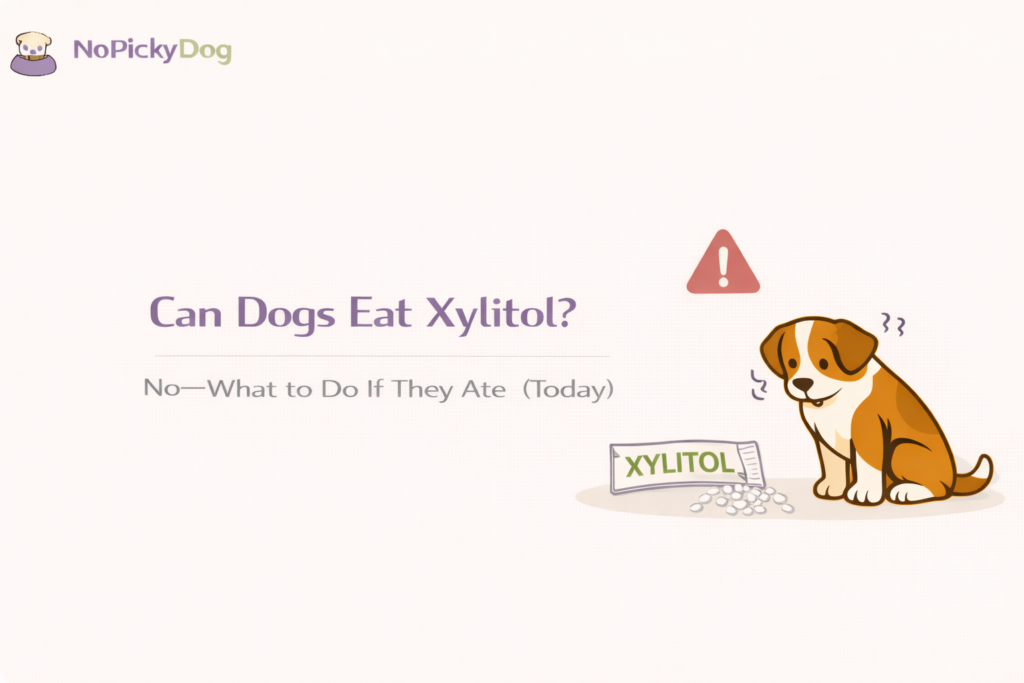
Xylitol (a sugar substitute found in many “sugar-free” products) is one of the most dangerous household ingredients for dogs. The scary part is that signs can start quickly, and you can’t “wait to see” safely.
This guide is a fast action plan: what to do today, what symptoms matter, and when it’s urgent.
Quick answer
No—dogs should not eat xylitol.
If your dog ate any product that might contain xylitol (gum, mints, sugar-free candy, baked goods, some peanut butters, toothpaste, vitamins, certain medications), treat it as urgent: call your vet or an emergency clinic right now. Don’t wait for symptoms.
Steps
Step 1 — Confirm what was eaten (product + amount + time)
Check for “Energy” drinks: If the item was a sugar-free energy drink or powder, it likely contains Caffeine too. See the Caffeine Emergency Guide
Grab the packaging and note:
- Product name + flavor (many “sugar-free” items vary)
- Estimated amount missing
- When it happened (minutes vs hours)
- Your dog’s weight and any medical history
This is exactly what the vet will ask.
Step 2 — Call a vet/ER first (don’t “watch and wait”)
Xylitol can trigger a rapid drop in blood sugar (hypoglycemia) and may also cause liver injury. Early treatment matters.
If it’s after hours, call the nearest emergency vet. If you’re in the U.S., you can also contact a poison control service for guidance (fees may apply). Cornell lists common 24/7 hotlines here:
Xylitol toxicities CVM
Step 3 — Do NOT induce vomiting unless a vet tells you to
Inducing vomiting can be dangerous in some dogs and situations. A vet will decide the safest next step based on timing and your dog’s condition.
Step 4 — Don’t give “home fixes” (honey, milk, food) unless instructed
You may see advice online about sugar/honey. Don’t do anything that could delay care or increase risk unless a vet specifically directs you.
Step 5 — Watch for early symptoms (but don’t rely on them)
Symptoms can include:
- Vomiting
- Weakness, wobbliness, collapse
- Tremors or seizures
- Unusual sleepiness or agitation
Even if your dog looks OK right now, you still need advice—xylitol emergencies can move fast.
Step 6 — Prevent the “hidden xylitol” mistake next time
Once your dog is safe, do a quick home sweep of common sources:
- Sugar-free gum/mints/candy
- Toothpaste/mouthwash
- Peanut butter labeled “sugar-free” or “no sugar added”
- Vitamins/supplements/medications (some flavored liquids)
ASPCA also warns that xylitol appears in many human products and can be dangerous for dogs:
People Foods to Avoid Feeding Your Pets ASPCA
Vet red flags
Go to an emergency vet now if you see any of these:
- Tremors, seizures, collapse, severe weakness
- Trouble breathing, extreme agitation, or unresponsiveness
- Repeated vomiting
- Your dog is very small, very young, senior, or has a medical condition
Why we treat this as urgent (authoritative references you can browse):
- FDA warning (symptoms like vomiting, weakness, staggering, collapse, seizures):
Paws Off Xylitol; It’s Dangerous for Dogs FDA - MSD/Merck Veterinary Manual (xylitol toxicosis: profound hypoglycemia; possible liver injury):
Xylitol Toxicosis in Dogs MSD/Merck - VCA (xylitol poisoning overview for dog owners; emphasizes contacting a vet/poison experts):
Xylitol Poisoning in Dogs VCA
Next steps
Pick the path that matches your situation:
- If your dog ate another common toxic food (chocolate):
Can Dogs Eat Chocolate? What to Do If They Ate Any (Today) - If your dog ate grapes/raisins:
Can Dogs Eat Grapes or Raisins? No—What to Do If They Ate Any - If your dog ate something “safe” but you’re worried about ingredients (like peanut butter label checks):
Can Dogs Eat Peanut Butter? Safe Amount + When It’s Not Safe - If you want more “can dogs eat this?” answers:
Dog Food & Safety Guides
Medical disclaimer: This content is for informational purposes only and does not replace professional veterinary advice.
Related guides
Dog Food & Safety Guides
Can Dogs Eat Chocolate? What to Do If They Ate Any (Today)
Can Dogs Eat Grapes or Raisins? No—What to Do If They Ate Any
Can Dogs Eat Peanut Butter? Safe Amount + When It’s Not Safe