Yogurt turns up constantly as a dog topper and a "settle the stomach" home remedy. The label is where it actually matters — because one ingredient that shows up in some yogurts is genuinely dangerous for dogs.
Quick Answer
Read the ingredients before you offer any yogurt.
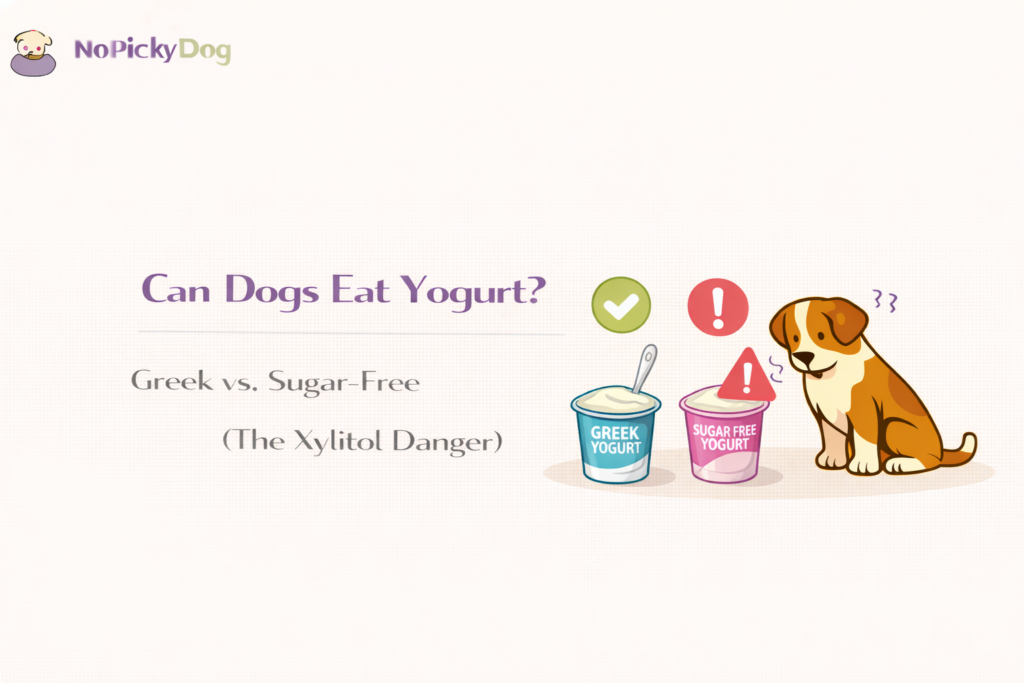
- Check for xylitol first. It appears in some "sugar-free," "diet," and "light" products. The ASPCA notes that xylitol can cause low blood sugar (hypoglycemia) and potentially liver damage, depending on the amount ingested.
- Plain and unsweetened is the version to consider at all. Flavoured, sweetened and fruit-added yogurts bring sugar and other ingredients that have nothing to do with your dog.
- Dairy may not agree with your dog. The ASPCA notes that pets do not possess significant amounts of lactase — the enzyme that breaks down lactose — so milk and other dairy-based products can cause diarrhea or other digestive upset.
- Yogurt is not a required part of a dog's diet. A complete and balanced food already covers your dog's needs. Treat yogurt as an optional extra that counts toward the day's calories.
Step 1: The xylitol check
This is the one step worth doing every single time, because it is the difference between a harmless spoonful and a veterinary emergency.
Turn the cup over and read the ingredients list. Anything labelled sugar-free, diet, light, or reduced-sugar deserves a careful look, because those are the products where a sugar substitute is most likely to be used.
What the sources say about xylitol specifically:
- The ASPCA lists xylitol as a sweetener used in many products and states it can cause low blood sugar (hypoglycemia) and potentially liver damage depending on the amount ingested, with initial signs including vomiting, lethargy and loss of coordination, which can progress to seizures.
- The MSD Veterinary Manual describes xylitol as producing a rapid, dose-dependent insulin release in dogs that can result in profound hypoglycemia, and notes that signs of liver injury may not appear until 24–48 hours after ingestion.
Two practical consequences of "dose-dependent": the amount and your dog's size both matter, and a dog that seems fine an hour later is not necessarily in the clear.
If your dog has eaten a product that contains xylitol, do not wait to see what happens. Contact your veterinarian or an animal poison control service, and take the packaging with you: Can Dogs Eat Xylitol? What to Do If They Ate Any Today
Step 2: Greek or regular?
If you have already decided to offer plain yogurt, Greek-style is the more common choice among owners, largely because straining produces a thicker product with less whey.
That said, the difference is not what decides whether yogurt suits your dog. Tolerance for dairy varies from dog to dog, and the ASPCA's point about lactase applies to both. A dog who reacts badly to regular yogurt may react to Greek yogurt too.
Step 3: If you offer it anyway
Plenty of owners use a spoonful of plain yogurt as a topper. If you do:
- Start with a very small amount and stop if you see loose stool, gas, or vomiting.
- Keep it plain — no added sugar, no fruit, no sweeteners.
- Count it as a treat. Extras of any kind are easiest to keep in proportion using the 10% rule for treats.
What this page will not tell you: a dose of yogurt to treat diarrhea, vomiting, or an upset stomach. A dog with ongoing digestive signs needs a veterinary opinion, not a dairy product — and adding dairy to an already upset gut can make the picture worse rather than better.
Vet red flags
Contact a veterinarian or an animal poison control service promptly if:
- Your dog ate a product that lists xylitol, or you cannot rule it out from the label
- You see vomiting, weakness, wobbliness or loss of coordination, collapse, or seizures
- Diarrhea or vomiting is repeated, severe, or contains blood
- Your dog is a puppy, a very small dog, a senior, or has a known medical condition
Sources
- ASPCA — People Foods to Avoid Feeding Your Pets: states that xylitol can cause hypoglycemia and potentially liver damage depending on the amount ingested, and that milk and dairy-based products can cause diarrhea or other digestive upset because pets lack significant amounts of lactase.
- MSD Veterinary Manual — Xylitol Toxicosis in Dogs: describes dose-dependent insulin release and profound hypoglycemia in dogs, and the delayed onset of liver injury signs.
Medical disclaimer: This content is for informational purposes only and does not replace professional veterinary advice.