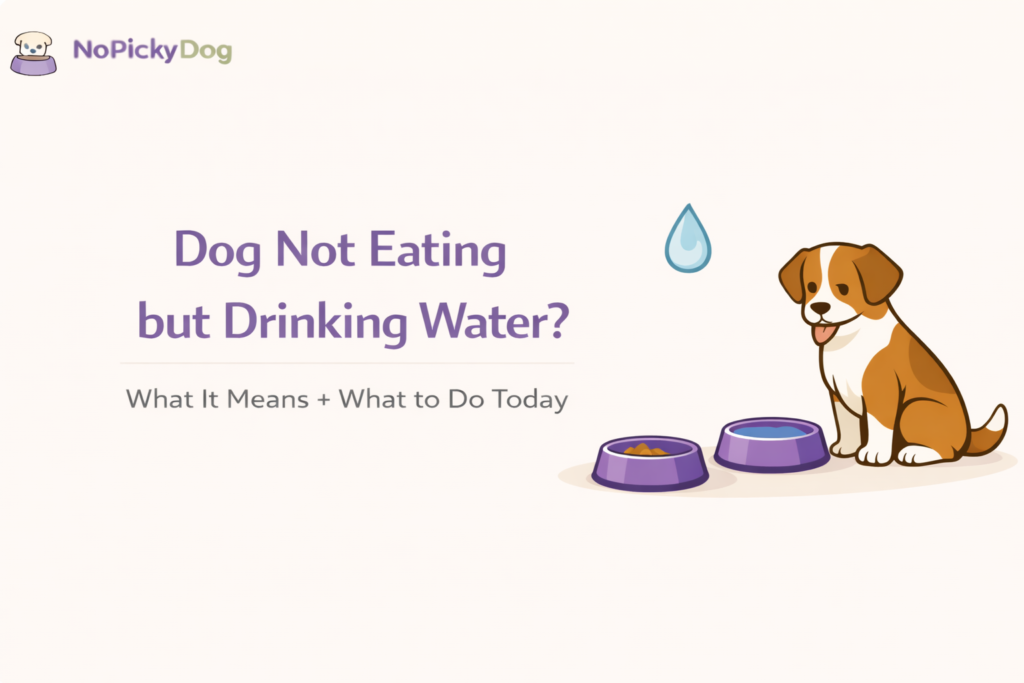
Seeing your dog refuse food but still drink water can feel oddly reassuring—at least they’re drinking, right? Sometimes it is a mild, short-term issue. But appetite changes can also be an early warning sign, even when drinking seems normal.
This guide helps you do three things today:
- spot vet red flags fast,
- figure out the most likely cause, and
- use a calm plan that supports appetite without creating picky-eating habits.
When to worry (vet red flags)
Contact your veterinarian or an emergency clinic now if your dog has any of the following:
- Repeated vomiting, vomiting blood, or severe diarrhea
- Blood in stool or black/tarry stool
- A swollen/hard belly, repeated unproductive retching, or obvious abdominal pain
- Trouble breathing, collapse, extreme weakness, or pale/blue gums
- Signs of significant pain (crying, trembling, hunched posture, refusing touch)
- Not urinating, straining to urinate, or obvious urinary pain
- Suspected toxin exposure (xylitol, chocolate, grapes/raisins, medications, cleaners, etc.)
- Your dog is drinking excessively and seems “off,” restless, or suddenly lethargic
- A puppy, very small dog, senior dog, or a dog with diabetes/kidney/liver disease skipping meals
If none of these apply and your dog is alert and drinking normally, you can usually start with a calm 24-hour plan.
Authoritative references:
- AAHA: Help! Is This a Pet Emergency?
- AKC: Why Won’t My Dog Eat?
- VCA: Anorexia in Dogs
- ASPCA: People Foods to Avoid Feeding Your Pets
Quick answer
If your dog won’t eat but is still drinking water, it usually falls into one of these buckets:
- A short-term routine issue (treats, toppers, schedule, stress) that lowers appetite but not thirst.
- Mild stomach upset or nausea (they drink, but food feels unappealing).
- Early discomfort (dental pain) or an early medical problem—especially if it lasts beyond 24 hours or comes with vomiting/diarrhea.
Your goal is not to “convince” your dog to eat with bigger rewards. Your goal is to rule out red flags and restore a calm, predictable meal routine.
If your dog is otherwise playful and acting normal, this related guide can help you troubleshoot the bigger picture:
Dog Not Eating But Acting Normal? 11 Common Causes + What to Do
What it can mean (and what to do)
1) Too many treats, chews, or table scraps
Dogs can drink normally while holding out for tastier options.
Fix checklist:
- Stop all treats/chews for 24 hours
- No table scraps for 7 days
- If you must reward training, use a small portion of the measured meal
2) Free-feeding or unpredictable schedule
If food is always available, hunger signals get weak—even though thirst stays normal.
Fix: switch to two set meal times and remove the bowl after 10–15 minutes.
3) “Learned upgrades” (toppers/hand-feeding dependence)
Your dog may have learned that skipping meals leads to better food.
Fix: follow the 10–15 minute bowl rule and stop bargaining (details in the 7-day reset plan below).
4) Mild nausea or stomach upset
Many dogs will drink but refuse food when mildly nauseated (sniff, then walk away).
Fix checklist:
- Keep meals small and scheduled
- Choose one gentle approach (warm water on kibble OR a small measured amount of wet food mixed in)
- Avoid switching foods repeatedly over a few days
5) Stress (new home, visitors, travel, schedule changes)
Stress can reduce appetite quickly without stopping thirst.
Fix checklist:
- Feed in a quiet spot
- Keep meal times consistent
- Avoid hovering or pressure
- Add a short calm walk before meals
6) Dental discomfort (especially with kibble)
Some dogs still drink normally but avoid crunchy foods when teeth/gums hurt.
Clues: bad breath, chewing on one side, dropping kibble, pawing at the mouth.
Fix: soften kibble with warm water temporarily and schedule a dental check if this repeats.
7) Recent vaccination or medication effects
A brief appetite dip can happen even when drinking looks normal.
Fix: monitor closely and call your vet if appetite doesn’t return within 24 hours (sooner if your dog seems unwell).
8) Drinking more than usual (possible medical issue)
If you notice unusually large water intake along with poor appetite, don’t wait it out.
Fix: call your vet to discuss next steps—especially if this is new or persistent.
9) Early illness with subtle signs
Sometimes appetite changes are the first sign.
Fix: if your dog refuses all food for 24 hours, call your vet for guidance—even if they’re still drinking.
A calm 24-hour plan (do this today)
If your dog is alert, drinking, and has no red flags, start here:
Step 1) Remove all extras
No treats, chews, table scraps, or “just a bite” today.
Step 2) Set two meal times
Example: 8 AM and 6 PM. No free-feeding.
Step 3) Use the 10–15 minute bowl rule
Put the bowl down, walk away, and pick it up after 10–15 minutes. No bargaining.
Step 4) Make the meal easier to eat (without creating a topping habit)
If your dog refuses dry kibble, choose ONE:
- Add warm water and wait 5–10 minutes (stronger smell, softer texture)
- Mix in a small measured spoon of wet food (mixed through, not just on top)
Step 5) Watch hydration and bathroom habits
Drinking is good—but pay attention to changes: excessive thirst, vomiting, diarrhea, or changes in urination are reasons to contact your vet.
A simple 7-day “calm reset” plan (prevents picky-eating spirals)
Rule 1) Two meal times only
Pick two times you can keep daily.
Rule 2) 10–15 minutes, then pick it up
Bowl down, walk away, bowl up after 10–15 minutes.
Rule 3) No extras for 7 days
No treats, chews, or table scraps. If you must reward training, use part of the measured meal.
Rule 4) Measure consistently
Use the same measuring method every time so hunger becomes predictable again.
Rule 5) Don’t “upgrade” meals
No hand-feeding and no replacing meals with something tastier right away.
What to do if your dog still won’t eat (simple decision guide)
- Skips one meal but drinks and acts normal: follow the 24-hour plan and remove extras.
- Skips two meals in a row: call your vet for guidance, especially if this is new behavior.
- Vomiting, diarrhea, pain, bloated belly, dehydration, toxin risk, or sudden excessive drinking: emergency vet now.
Common mistakes that make picky eating worse
- Adding better toppers every time your dog refuses food
- Hand-feeding “just to get something in” (unless your vet instructed it)
- Switching foods repeatedly within a few days (food-hopping)
- Leaving food down all day (no appetite rhythm)
- Feeding treats while expecting full meals
FAQ
1) Is it a good sign that my dog is still drinking water?
It can be reassuring, but it doesn’t rule out a problem. Use the red-flag checklist, and if your dog won’t eat for 24 hours, call your vet for guidance.
2) My dog is drinking a lot but not eating—should I worry?
Yes, especially if the water intake is clearly higher than normal or this is new. Call your vet and describe the change.
3) What if my dog will eat treats but not meals?
That’s often learned pickiness or treat overload. Remove all extras and follow the 7-day reset plan.
4) Should I switch foods right away?
Not on day one. Rapid switching often creates more pickiness. Start with routine and consistency first.
5) What’s the best first step I can take today?
Remove all extras (treats, chews, scraps) and use the 10–15 minute bowl rule at two consistent meal times.
Related guides
- Dog Not Eating But Acting Normal? 11 Common Causes + What to Do
- Dog Not Eating in the Morning? 9 Common Causes + What to Do
- Dog Won’t Eat Kibble but Eats Treats? Fix It (7-Step Plan)
- Stop Hand-Feeding a Picky Dog (Without Stress): A Simple 7-Day Reset
- How to Fix a Picky Eater Dog Fast: A 7-Day Plan That Works
- Dog Eating Once a Day Only? Is It Normal + How to Fix It
Medical disclaimer
This article is for general education and is not a substitute for veterinary diagnosis or treatment. If you’re worried about your dog or symptoms persist, contact your veterinarian.