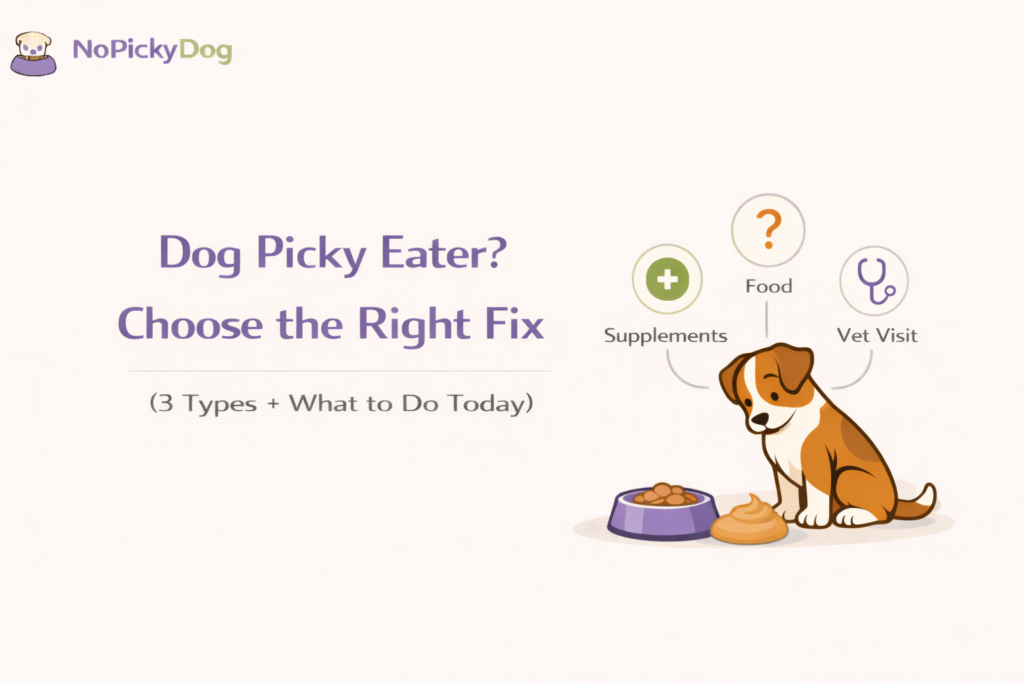
"Picky" is not one problem. A dog holding out for chicken, a dog who skips breakfast and eats fine at night, and a dog who was normal until last Tuesday need three different responses — and the fastest way to waste a week is to try all of them at once.
This page does one job: help you name the pattern you are actually in, and send you to the one guide that matches it.
Before anything else: vet red flags
Do not run any picky-eating plan if any of these apply. Contact a vet instead:
- Refusing food and water, or signs of dehydration (dry gums, sunken eyes, weakness)
- Repeated vomiting, ongoing diarrhea, blood in stool or vomit, or obvious belly pain
- Extreme lethargy, collapse, trouble breathing, or a sudden "not themselves"
- Suspected toxin or foreign-object ingestion, repeated retching, or a swollen, painful belly
- Puppies, seniors, very small dogs, or dogs with known medical conditions who stop eating
- Noticeable weight loss, or an appetite drop lasting more than 48 hours
AAHA lists appetite changes among the pet health signs never to ignore, noting that a sudden change can indicate pain or illness: 10 Pet Health Signs You Should Never Ignore. The MSD (Merck) Veterinary Manual lists loss of appetite alongside vomiting, diarrhea, bleeding, abdominal pain and dehydration as signs of digestive disease: Introduction to Digestive Disorders of Dogs.
Start with the pattern
Before you pick a fix, answer two questions. They decide almost everything.
1. Did this start suddenly, or has it built up over months?
A dog who was eating normally and changed within days is a different problem from a dog who has been negotiating at the bowl since puppyhood. Sudden means look backwards at what changed. Gradual means look at what the routine has been teaching.
2. Is your dog refusing food, or refusing this food?
A dog who happily takes treats, toppers or what is on your plate is not off their food — they are holding out for a better offer. A dog who turns away from everything, treats included, is a different situation and belongs with your vet sooner.
Which situation looks most like your dog?
Pick the one that fits best. One is enough — you do not need to read them all.
Eats treats happily, refuses the actual meal
The most common pattern by far. The meal is competing with something better and losing. Start here: Dog Won't Eat Kibble but Eats Treats? If it is specifically your food they are waiting for, this one instead: Dog Won't Eat Dog Food But Eats Human Food?
Will only eat with a topper on it
Plain kibble gets refused, kibble with something on top gets eaten. The fix is reducing the topper without restarting the standoff: Dog Won't Eat Kibble Without Toppers? 4 Steps to Cut Back Safely
Will only eat from your hand
Food in the bowl is ignored; the same food offered by hand is taken. This has its own plan: Stop Hand-Feeding a Picky Dog (Without Stress)
Was eating normally, then suddenly became picky
Do not treat this as a training problem yet. Look at what changed in the last week or two first: Dog Suddenly Picky With Food? What Changed Recently
Skips certain meals but eats at other times
Not hungry in the morning, or only really eats at night. This is usually timing and appetite rhythm rather than pickiness: Dog Not Eating in the Morning? · My Dog Only Eats Once a Day (Often at Night)
Eats some, then walks away
Portion size is the first thing to check — a dog who is quietly overfed looks exactly like a dog who is fussy: Portion Basics: How Much to Feed a Picky Dog
Every trick works once, then stops working
You changed food, it worked for four days, then it stopped. New topper, same story. That pattern has a name and a mechanism: Why Dogs Get Picky: The "Upgrade Loop"
Do not change everything at once
This is the mistake that turns a two-week problem into a six-month one.
When a dog refuses dinner, the instinct is to fix all of it tonight — new food, a topper, an earlier mealtime, a smaller portion, hand-feeding to get something in. If your dog then eats, you have learned nothing about which change did it. If your dog still refuses, you have taught them that refusing produces four new offers.
Change one thing. Hold it for several days. Then judge it. Whichever guide you picked above will tell you which one thing to change first — that is the entire point of choosing a path instead of improvising.
And if you are already several changes deep, do not try to reverse all of them tonight either. Pick the single pattern that fits your dog best and start there.
Use the Picky Eating Check if the pattern is unclear
Some dogs do not fit cleanly into one box, and some households genuinely cannot tell whether the dog is holding out or off their food.
Not sure which pattern fits? Start the Picky Eating Check — it walks through the same questions and gives you one place to start, instead of changing food, toppers and routine all at once and not knowing what worked.
If you have already identified the pattern and just want a structured plan to follow, that is here: How to Make a Picky Dog Eat (Fast): A 7-Day Reset Plan
Medical disclaimer: This content is for informational purposes only and does not replace professional veterinary advice.