A puppy skipping breakfast can be nothing (schedule, treats, stress)… or it can be risky because puppies have smaller energy reserves. If your puppy seems “fine” but won’t eat breakfast, use this guide to decide what to do today, and when to call a vet.
Not sure what to do today? Take the 30-second path.
Quick answer
If your puppy won’t eat breakfast but is acting normal, start with a simple rule:
- If your puppy is very young (especially toy breeds) or has skipped more than one meal: treat it as higher risk—offer a small, easy meal now and watch closely.
- If your puppy is bright, drinking water, and eats later the same day: it’s often routine (timing, treats, mild stress, teething).
- If there’s vomiting, diarrhea, weakness/trembling, collapse, belly pain, or dehydration: call a vet now.
Steps
Step 1) Confirm “acting normal” (2-minute check)
Normal means:
- alert/interactive
- drinking water
- normal breathing
- peeing at least a few times per day
Not “normal” (stop here → vet):
- repeated vomiting
- watery diarrhea
- severe lethargy
- trembling/weakness
- pale gums, collapse
- swollen/painful belly
Step 2) Do the “small safe meal” test (don’t pressure)
Offer one small option and give 10–15 minutes:
- warm, softened kibble (soak in warm water 5–10 min)
- a small portion of their normal wet food
- for tiny puppies: a smaller, more frequent meal (not a giant portion)
If they refuse, remove the bowl and try again at the next scheduled time (don’t free-feed all day).
Step 3) Fix the #1 silent cause: timing + extras
Most “breakfast refusal” is created by the day before:
- treats/chews add up
- dinner portion is too big
- late-night snacks shift hunger later
Today:
- no treats until the puppy eats a real meal
- keep meals on schedule (same times daily)
- keep portions consistent
If you’re unsure about portions, start here:
Portion Basics: How Much to Feed a Picky Dog (Without Guessing)
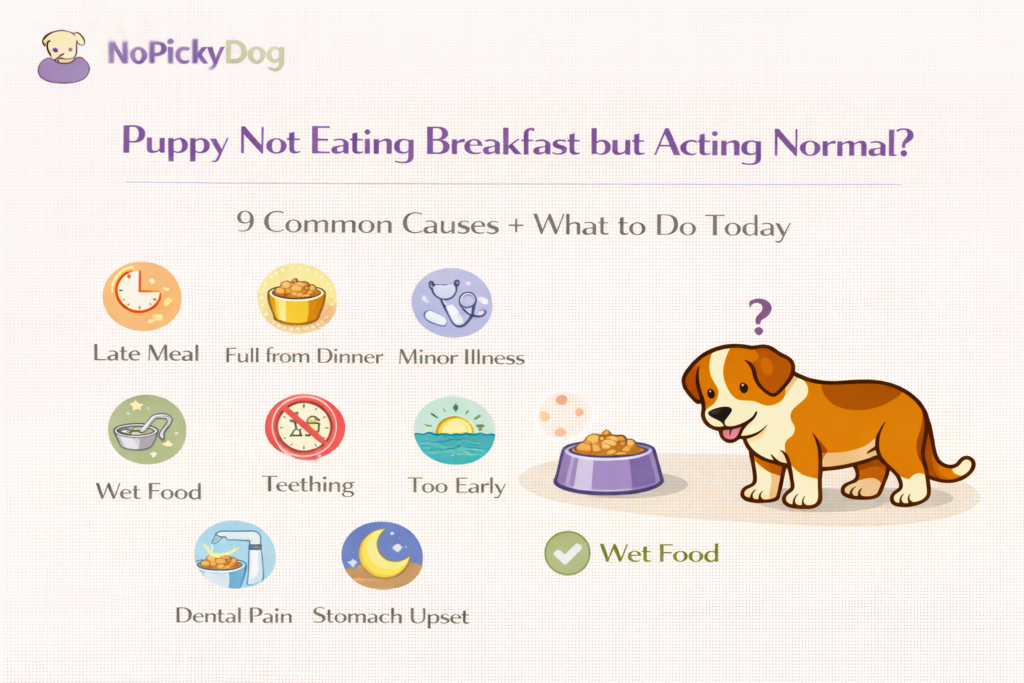
Step 4) If this started suddenly, check the most common puppy triggers
- Teething: chewing hurts → soften food.
- Recent vaccine / new environment: appetite can dip briefly.
- Food change happened too fast: stomach upset → refusal.
If you recently switched food and stools got soft, use this transition fix:
Soft Stool During a Dog Food Transition: What to Do + When to Worry
Step 5) Know the puppy-specific risk: low blood sugar (toy/small breeds)
Very young or very small puppies can get into trouble faster if they don’t eat. If you see weakness, shaking/tremors, confusion, collapse, or seizures, treat it as urgent and call a vet.
External reference (why this matters):
- Merck Vet Manual — Lists hypoglycemia signs in dogs, including collapse and seizures (why “low blood sugar” is an ER-level risk in some cases).
- VCA Hospitals — Shows how frequently newborn puppies must be fed (every 2–4 hours early on), which is why long fasting windows are risky.
Vet red flags
Call a vet urgently if your puppy has any of these:
- vomiting more than once, or vomiting + not eating
- diarrhea, especially watery or with blood
- won’t eat any meals for ~24 hours (sooner if very young/small)
- weakness, trembling, collapse, seizures
- signs of dehydration (dry gums, sunken eyes, very low urine)
- painful/swollen belly, repeated unproductive retching
- suspected toxin/foreign object (chewed toy, strings, meds)
Next steps
Pick the path that matches your situation:
- My puppy skipped breakfast but seems fine → use the morning refusal checklist:
Dog Not Eating in the Morning? 9 Common Causes + What to Do - My dog isn’t eating but “acts normal” (I’m not sure if it’s urgent) → use the triage guide:
Dog Not Eating But Acting Normal? 11 Common Causes + What to Do - I want a structured reset that stops picky patterns → start the 7-day plan:
How to Fix a Picky Eater Dog Fast: A 7-Day Plan That Works
Medical disclaimer: This guide is educational and not a substitute for a veterinarian. If your puppy is very young/small or shows red flags (weakness, tremors, vomiting, dehydration), contact a vet promptly.