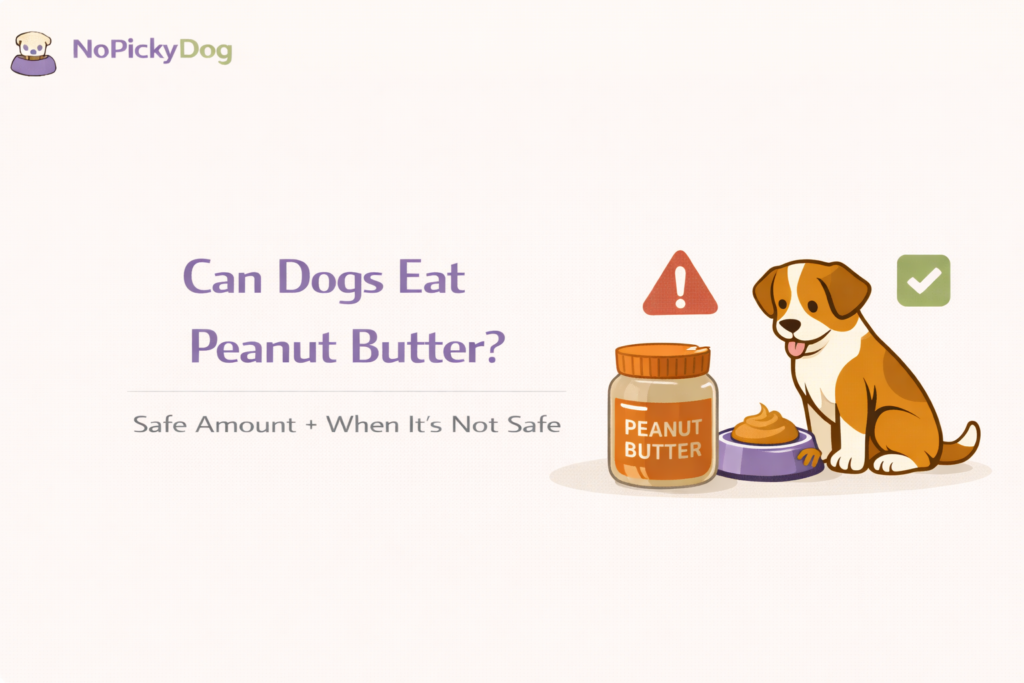
Peanut butter is one of the most common “easy treats” for dogs—especially for training, pill hiding, or stuffing a toy. The problem is that peanut butter is very calorie-dense, and some products contain ingredients you should avoid.
This guide gives you a simple safety checklist, a practical “safe amount” rule you can use today, and clear signs that peanut butter is not a good choice for your dog.
Quick answer (what to do today)
Yes—most dogs can have peanut butter in small amounts. The safest way to use it is:
- Choose plain peanut butter with a short ingredient list (peanuts + maybe a little salt).
- Avoid any peanut butter that lists xylitol (sometimes labeled as “birch sugar”) or other unusual sweeteners.
- Use peanut butter as a treat, not a food add-on: keep it rare and small, because it’s easy to overfeed.
- If your dog vomits, has diarrhea, gets very lethargic, or shows belly pain after peanut butter, stop and contact your vet.
If treats are replacing meals (very common), start here:
Dog Won’t Eat Kibble but Eats Treats? Fix It (7-Step Plan)
Steps (safe use, safe amount, and what to avoid)
Step 1) Check the label first (this matters more than the brand)
Use this quick label checklist before you share peanut butter:
- ✅ Ingredients should be simple: peanuts (and possibly salt).
- ⚠️ Avoid “dessert-style” or flavored versions (they’re often higher in sugar, salt, and additives).
- ❌ Do not use peanut butter that lists xylitol (sometimes called “birch sugar”).
- If you want a bigger picture of “can dogs eat this?” rules, use the hub:Dog Food & Safety Guides
- If you’re choosing dog-safe “human food” treats, this list is a safer starting point than random snacks: Best Fruits and Vegetables for Dogs (Safe List + Portion Guide)
External sources (for label safety):
- For a quick overview of sugar substitutes and why some are dangerous for dogs, see the ASPCA Animal Poison Control guidance on xylitol:
Poisonous Plants ASPCA - For a quick overview of sugar substitutes and why some are dangerous for dogs, see the FDA’s guide on xylitol toxicity in dogs:
Paws Off! Xylitol is Toxic to Dogs FDA
Step 2) Safe amount (simple rule that actually works)
Peanut butter is best treated like a high-calorie training treat—not something you add “because it’s healthy.”
A practical rule of thumb:
- Start tiny the first time (a lick or a very small smear).
- Keep it occasional, not daily.
- If you use peanut butter to hide pills or in a stuffed toy, count it as treats for the day (and reduce other treats).
If you’ve never measured portions, many “picky” dogs are simply not hungry because treat calories add up. Start here:
Portion Basics: How Much to Feed a Picky Dog (Without Guessing)
⚠️ High-Fat Warning: Peanut butter isn’t the only healthy fat that carries risks. Avocados are also high in fat but come with extra dangers like choking hazards. Read the Avocado Safety Guide here
Step 3) Use peanut butter in a way that won’t create picky eating
Peanut butter becomes a problem when it teaches your dog:
“Refuse the meal → get something better.”
If your dog starts waiting for peanut butter or only eating when you add something tasty:
- Stop using it at mealtimes.
- Use it away from meals (training sessions only).
- Run a simple reset for 7 days (no upgrades, no bargaining).
Full reset plan:
How to Fix a Picky Eater Dog Fast: A 7-Day Plan That Works
Step 4) When peanut butter is a bad idea (even if the label looks fine)
Peanut butter may not be a good choice if your dog:
- Has a history of pancreatitis or gets stomach upset from fatty treats
- Is trying to lose weight (peanut butter makes “treat math” harder)
- Has a very sensitive stomach (fatty treats can trigger soft stool)
- Gets itchy skin, ear issues, or GI signs after peanut butter (possible sensitivity)
If you’re unsure, pick safer, lower-calorie treats and keep it simple for 1–2 weeks.
Vet red flags (stop and call a vet)
Contact a vet promptly if your dog has any of these after peanut butter:
- Repeated vomiting
- Severe diarrhea or diarrhea with blood
- Obvious belly pain, hunched posture, restlessness
- Extreme lethargy, collapse, weakness
- Refusal to drink water
- Swollen face/hives or trouble breathing (possible allergic reaction)
Short medical disclaimer: This content is for informational purposes only and does not replace professional veterinary advice.
Next steps
Pick the path that matches your situation:
- If treats are replacing meals (most common):
Dog Won’t Eat Kibble but Eats Treats? Fix It (7-Step Plan) - If you want to reset picky eating without toppers:
How to Fix a Picky Eater Dog Fast: A 7-Day Plan That Works - If you’re not sure portions/treat calories are the real issue:
Portion Basics: How Much to Feed a Picky Dog (Without Guessing) - If your dog ate chocolate and you need the fastest “what to do today” plan:
Can Dogs Eat Chocolate? What to Do If They Ate Any (Today) - If you want more “can dogs eat this?” answers:
Dog Food & Safety Guides
Related guides
- Dog Food & Safety Guides
- Dog Won’t Eat Kibble but Eats Treats? Fix It (7-Step Plan)
- Portion Basics: How Much to Feed a Picky Dog (Without Guessing)
- How to Fix a Picky Eater Dog Fast: A 7-Day Plan That Works
- Can Dogs Eat Grapes or Raisins? No—What to Do If They Ate Any
- Can Dogs Eat Chocolate? What to Do If They Ate Any (Today)
- Can Dogs Eat Xylitol? No—What to Do If They Ate Any (Today)