If you’re searching “dog picky eater” or “how to make a picky dog eat,” the fastest way to stop guessing is to identify which kind of picky eater you’re dealing with. Most “picky” situations follow repeatable patterns—and each pattern has a different fix.
This page is a simple choose-your-path guide. You’ll do a quick check, follow the right steps, then jump into the best matching deeper guide on NoPickyDog.
Quick answer
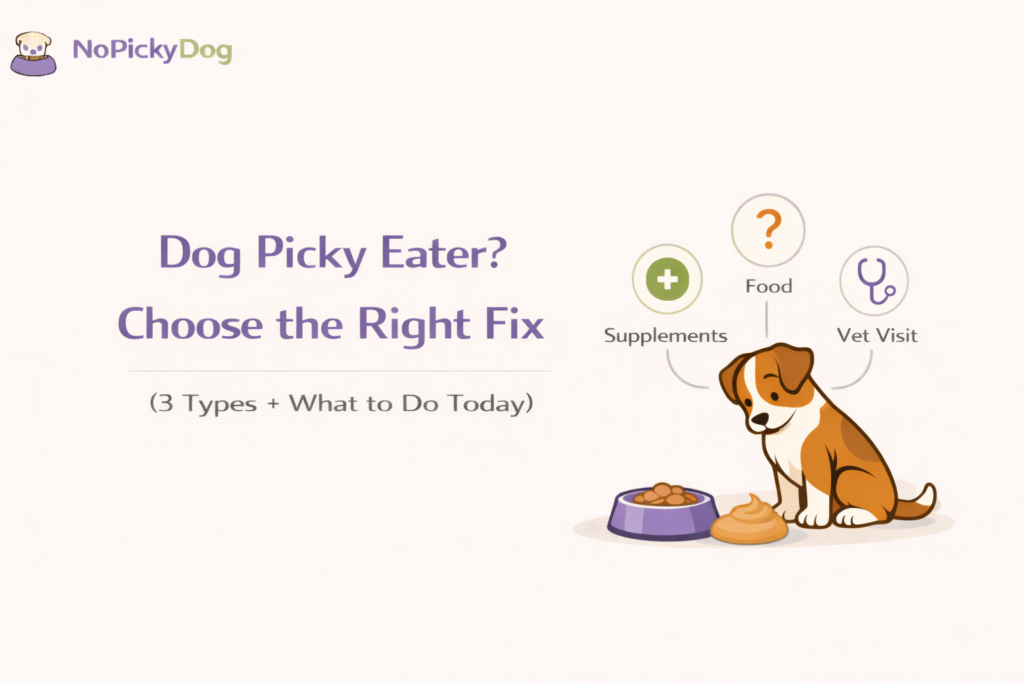
Most picky eaters fit one of three types:
- Type A: Treat-driven / learned picky (treats or toppers are “winning” over meals)
- Type B: Schedule-driven (not hungry in the morning, eats once a day, prefers night)
- Type C: Sudden change (your dog’s appetite dropped all of a sudden—could be stress, GI upset, pain, or illness)
If you see vet red flags (below), don’t run a picky reset—contact your vet. If not, pick the type that matches your dog and follow the steps.
Steps
Step 1 — Do the 30-second red-flag screen
Before changing food, adding toppers, or rotating brands, scan the Vet red flags section. If any apply, prioritize medical guidance.
If no red flags, continue.
Step 2 — Identify your picky type (60-second checklist)
Pick the best match:
Type A: Treat-driven / learned picky
- Eats treats/human food, but refuses the main meal
- Appetite is “selective,” not truly gone
- The pickiness gets worse when you offer choices
- Hand-feeding or topping has increased
Type B: Schedule-driven
- “Not hungry in the morning” but eats later
- Often eats once a day (sometimes at night) and otherwise seems normal
- Energy is normal; weight is stable
- This pattern has been consistent (not a sudden drop)
Type C: Sudden change
- Used to eat normally, then appetite dropped all of a sudden
- You notice new stress, travel, routine change, diet transition, GI signs, or behavior changes
- It feels different from your dog’s normal baseline
Now follow the matching path.
Step 3 — If Type A: Treat-driven (most common), fix the “reward math”
This pattern improves fastest when you stop accidentally teaching: “Skip dinner and something better appears.”
Do this today:
- Lock in the treat limit (10% rule) so treats can’t replace meals
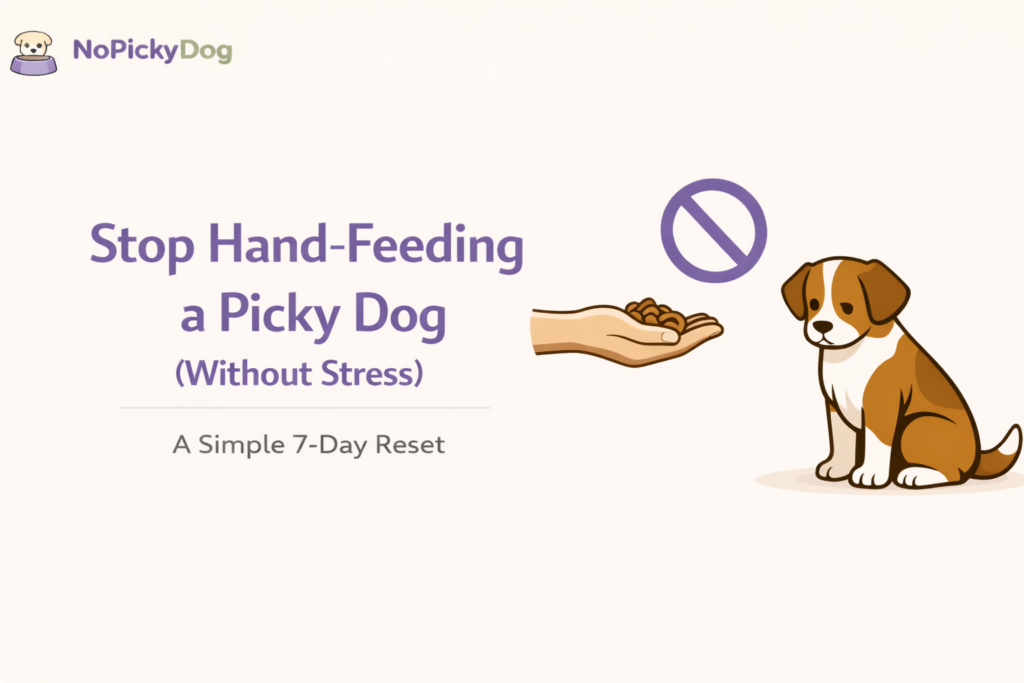
- Stop hand-feeding without stress (so refusal doesn’t get rewarded)
- If your dog refuses kibble but eats treats, follow the targeted plan
- Make sure you’re not over-serving (overfeeding often looks like “picky”)
If you want the full structured reset plan (simple, calm, no toppers required):
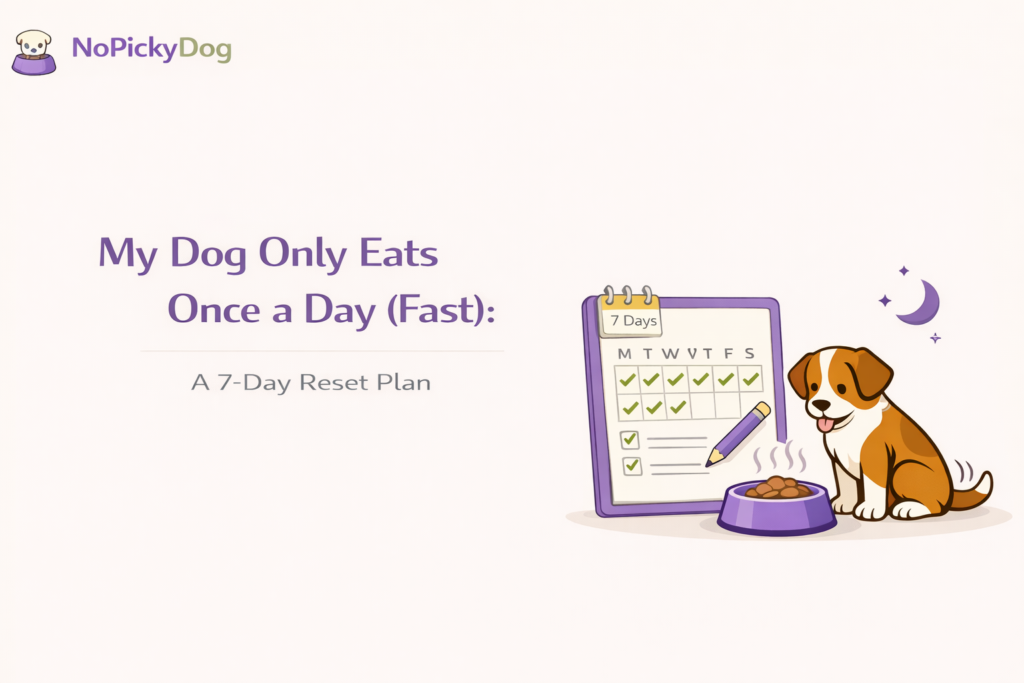
How to Make a Picky Dog Eat (Fast): A 7-Day Reset Plan
Step 4 — If Type B: Schedule-driven, don’t panic-switch foods—adjust structure
If your dog is otherwise normal, the fix is usually routine + portions + timing, not constant food changes.
Do this today:
- Choose a consistent feeding schedule for 7 days (same times daily)
- Use a short meal window (10–15 minutes), then pick it up
- Avoid grazing/all-day access to food
- Recheck portions (too many calories = “not hungry”)
Use the matching guides:
- Not eating in the morning: Dog Not Eating in the Morning? 9 Common Causes + What to Do
- Eating once a day only (often at night): My Dog Only Eats Once a Day (Often at Night): Is It Normal + What to Do
- Best time to feed once a day: Best Time to Feed a Dog Once a Day (Morning vs Night) + Is It Cruel?
- Should dogs only eat once a day / is it cruel: Should Dogs Only Eat Once a Day? Is It Cruel? When It’s OK + When to Worry
- Portion basics (do this if you’re unsure): Portion Basics: How Much to Feed a Picky Dog (Without Guessing)
Step 5 — If Type C: Sudden change, treat it as a “cause-first” problem
When appetite drops suddenly, rapidly rotating foods can hide the real issue and create more chaos.
Do this today:
- Don’t rotate foods rapidly—stick to one familiar option for 48–72 hours
- Track the pattern: drinking? energy? stool changes? vomiting? discomfort?
- Follow the sudden-change checklist to find the most likely causes + next step:
Dog Picky With Food All of a Sudden? 10 Real Causes + What to Do Today - If “not eating but acting normal,” use a structured checklist anyway
Dog Not Eating But Acting Normal? 11 Common Causes + What to Do - If “not eating but drinking water,” use this guide today
Dog Not Eating but Drinking Water? What It Means + What to Do Today
Step 6 — If you’re still stuck, run the full 7-day reset (no guessing)
If there are no red flags and the pattern is Type A or Type B, the simplest system is the 7-day reset plan:
How to Make a Picky Dog Eat (Fast): A 7-Day Reset Plan
Vet red flags
Contact a vet promptly if any of these apply (skip the picky reset):
- Refusing food AND water, or signs of dehydration (dry gums, sunken eyes, weakness)
- Repeated vomiting, ongoing diarrhea, blood in stool/vomit, or obvious belly pain
- Extreme lethargy, collapse, trouble breathing, or a sudden “not themselves”
- Suspected toxin/foreign object ingestion, repeated retching, or a swollen/painful belly
- Puppies, seniors, very small dogs, or dogs with known medical conditions who stop eating
- Noticeable weight loss, or an appetite drop lasting more than 48 hours
Why these red flags matter (authoritative sources):
AAHA (American Animal Hospital Association): includes “appetite changes” as a pet health sign you should never ignore, noting sudden appetite changes can indicate pain, illness, or other problems and advising you to contact a veterinarian—supporting our “skip the reset if red flags” guidance.
10 Pet Health Signs You Should Never Ignore AAHA
MSD (Merck) Veterinary Manual — Dog Owners: lists common signs of digestive disease in dogs, including loss of appetite alongside vomiting/diarrhea, bleeding, abdominal pain, shock, and dehydration. This supports why “not eating + GI signs + dehydration/pain” is a vet-prompt situation.
Introduction to Digestive Disorders of Dogs MSD (Merck) Veterinary Manual
If you’re worried about “how long is safe,” use this guide:
How Long Can a Dog Go Without Eating? Safe Limits + When to Worry
Next steps
Pick the path that matches your situation:
- If treats are replacing meals (most common):
Dog Won’t Eat Kibble but Eats Treats? Fix It (7-Step Plan) - If you want to reset picky eating without toppers:
How to Fix a Picky Eater Dog Fast: A 7-Day Plan That Works - If you’re not sure portions/treat calories are the real issue:
Portion Basics: How Much to Feed a Picky Dog (Without Guessing) - If you want more “can dogs eat this?” answers:
Dog Food & Safety Guides
Medical disclaimer: This content is for informational purposes only and does not replace professional veterinary advice.