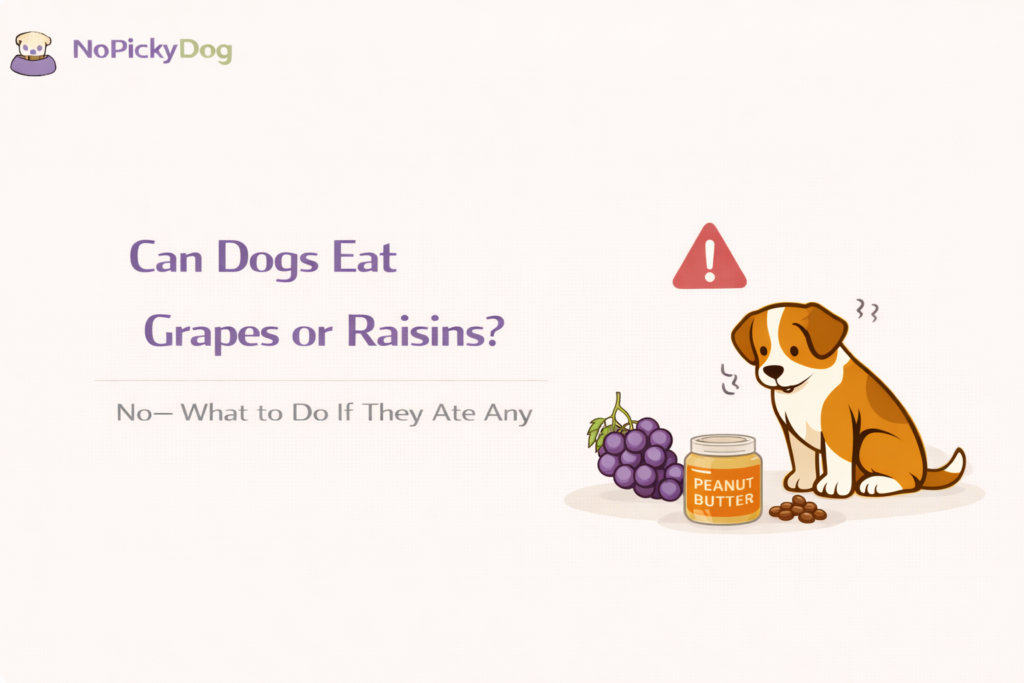
“Can dogs eat grapes?” is one of those questions where the safest answer is simple: don’t risk it. Grapes (and especially raisins) can cause sudden kidney injury in some dogs, and we still can’t predict which dogs will react badly or what dose will trigger it.
This guide shows what to do today if your dog ate any grapes/raisins, what symptoms to watch for, and safer fruit alternatives.
Quick answer
No—dogs should not eat grapes or raisins. In some dogs, even small amounts can be toxic and may cause serious illness. If your dog ate any grapes or raisins, don’t “wait and see”—contact a veterinarian or a poison hotline as soon as possible.
Do this now (5-minute checklist):
- Remove any remaining grapes/raisins and stop access (trash, trail mix, baked goods).
- Estimate what was eaten (grapes vs raisins), how much, and when (minutes/hours ago). Save the packaging if relevant.
- Do not induce vomiting or give home remedies unless a vet tells you to.
- Call your vet or an emergency clinic right away—early treatment is time-sensitive.
Go now / call urgently if any of these apply:
- Your dog is vomiting, very lethargic, shaking, has diarrhea, seems painful, or won’t drink water
- You’re not sure how much was eaten
- Your dog is very small, a puppy, a senior, or has kidney disease/other chronic illness
What symptoms to watch for (even if your dog seems fine at first):
vomiting, diarrhea, loss of appetite, tiredness, belly pain, increased thirst, or changes in urination.
If your dog already ate raisins, follow this step-by-step emergency guide: Dog Ate Raisins: What to Do Today (Emergency Steps + When to Call a Vet)
Not sure about another food? Use the quick checker here: Food Safety Checker.
Steps
Step 1 — Confirm what was eaten (and when)
Quickly gather:
- What it was: grapes, raisins, sultanas, currants, trail mix, cookies, granola, bread, etc.
- How much (best estimate is fine)
- When it happened (minutes ago vs hours ago)
- Your dog’s size and any health issues
You’ll be asked these when you call a vet.
Step 2 — Call a vet/ER clinic first (don’t “watch and wait”)
With grapes/raisins, the risk is that kidney injury can start before obvious symptoms. The best outcomes happen when you get early advice and treatment.
If it’s after hours, call:
- Your local veterinary emergency hospital/urgent care
- Your regular vet’s after-hours line (if available)
Step 3 — Do NOT induce vomiting unless a vet tells you to
Some dogs should not be made to vomit (risk of aspiration, breathing issues, seizure history, certain anatomy/conditions). A vet will decide if inducing vomiting is appropriate based on time since ingestion and your dog’s risk factors.
Step 4 — Don’t “balance it out” with food, milk, or extra water
Home “antidotes” don’t neutralize grapes/raisins. Giving random foods can delay proper care or make nausea worse.
If your dog seems thirsty, you can offer normal access to water, but don’t force water.
Step 5 — Watch for early warning signs (but don’t rely on them)
Symptoms that can appear include:
- Vomiting, diarrhea
- Lethargy, weakness, not acting normal
- Abdominal discomfort
- Decreased appetite
- Increased thirst or changes in urination
Important: some dogs can look okay at first—this is why calling early matters.
Step 6 — After the vet plan, keep meals simple for 24–48 hours
If your vet has cleared the immediate risk or your dog is being monitored:
- Keep meals plain and predictable
- Avoid new treats/chews and “extras”
- Track water intake, energy, vomiting/diarrhea, and urination
If your dog’s stool becomes soft after stress or a diet change during this period, use this guide:
Soft Stool During a Dog Food Transition: What to Do + When to Worry
Vet red flags
Call a vet urgently if:
- Any grape/raisin ingestion is suspected (even “a few”)
- Repeated vomiting/diarrhea, blood in vomit/stool, or obvious belly pain
- Severe lethargy, weakness, collapse, trembling
- Not drinking, signs of dehydration (dry gums, sunken eyes)
- Very small dogs, puppies, seniors, or dogs with known kidney disease
Why we treat this as urgent (authoritative references):
- ASPCA Animal Poison Control lists grapes/raisins among foods that can be dangerous to pets, and advises contacting a professional resource promptly after exposure:
People Foods to Avoid Feeding Your Pets ASPCA - Merck/MSD Veterinary Manual explains that gastrointestinal signs (vomiting/diarrhea), abdominal pain, dehydration, and appetite changes can be important warning signs in digestive illness—exactly the cluster we use for “don’t wait” guidance:
Introduction to Digestive Disorders of Dogs MSD (Merck) Veterinary Manual
If you’re unsure whether your dog’s reduced appetite is already “too long,” use:
How Long Can a Dog Go Without Eating? Safe Limits + When to Worry
Next steps
Pick the path that matches your situation:
- If your dog ate grapes/raisins and you want a fast “should I worry” decision guide:
How Long Can a Dog Go Without Eating? Safe Limits + When to Worry - If your dog isn’t eating but seems mostly normal (you’re unsure how serious it is):
Dog Not Eating But Acting Normal? 11 Common Causes + What to Do - If your dog isn’t eating but is still drinking water:
Dog Not Eating but Drinking Water? What It Means + What to Do Today - If you want more “can dogs eat this?” answers:
Dog Food & Safety Guides - If you suspect toxin ingestion (especially chocolate):
Can Dogs Eat Chocolate? What to Do If They Ate Any (Today)
Medical disclaimer: This content is for informational purposes only and does not replace professional veterinary advice.
Related guides
Can Dogs Eat Chocolate? What to Do If They Ate Any (Today)
Can Dogs Eat Chocolate? What to Do If They Ate Any (Today)
Can Dogs Eat Peanut Butter? Safe Amount + When It’s Not Safe
How Long Can a Dog Go Without Eating? Safe Limits + When to Worry
Dog Not Eating But Acting Normal? 11 Common Causes + What to Do
Dog Not Eating but Drinking Water? What It Means + What to Do Today