It is the ultimate high-value treat. The sound of a cheese wrapper opening can wake a dog from a deep sleep.
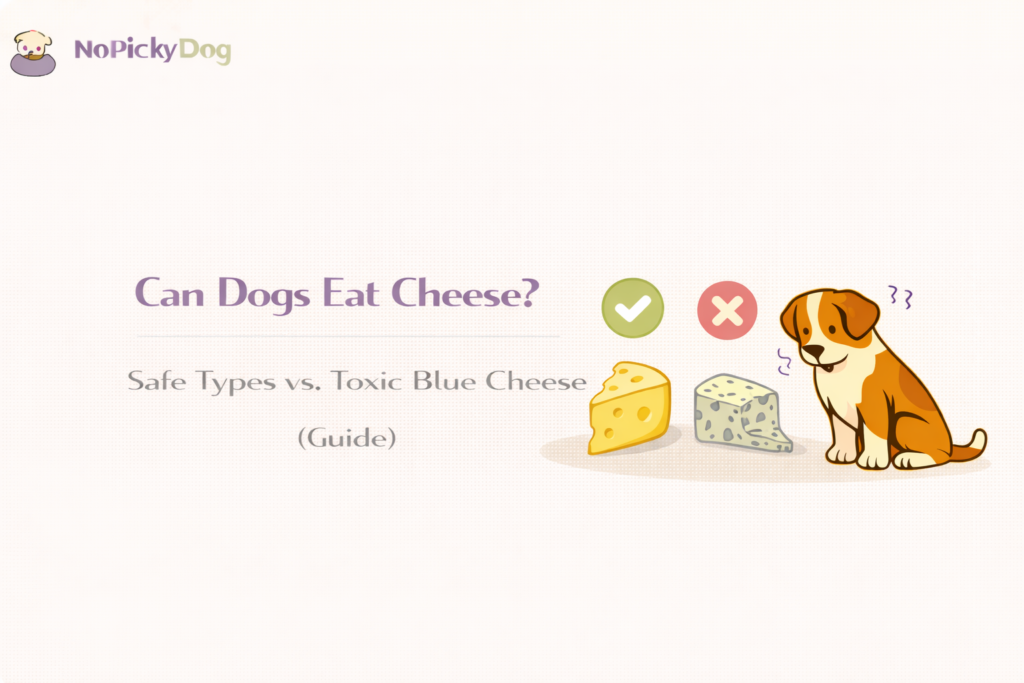
But is it safe? Generally, yes. Cheese is a favorite tool for trainers and vets to hide pills. However, not all cheese is created equal. While a cube of Cheddar is a tasty snack, Blue Cheese can actually be toxic.
Here is the definitive guide to sharing this dairy favorite safely.
Quick Answer
Yes, most dogs can eat plain, low-lactose cheese in small amounts.
- The Safe List: Cheddar, Mozzarella, and Cottage Cheese.
- The Danger Zone: Blue Cheese (Roquefort, Stilton, Gorgonzola). These contain a mycotoxin called Roquefortine C which can cause tremors and seizures in dogs.
- The Risk: Many dogs are Lactose Intolerant. Feeding too much cheese can cause immediate diarrhea and gas.
Step 1: The “Blue Cheese” Warning (Toxic)
Most owners know about chocolate, but few know about Blue Cheese. The fungus used to make these cheeses produces Roquefortine C, a substance dogs are highly sensitive to.
Symptoms of Poisoning:
- Vomiting and Diarrhea
- High Temperature
- Tremors or Seizures (The hallmark sign)
Action: If your dog ate a block of Blue Cheese or raided a cheese board, call the vet.
Step 2: Best Cheeses for Pills & Training
If you are using cheese to hide medication or as a “Jackpot Reward” for training:
- Cheddar (Aged): Aging naturally reduces lactose levels, making it easier to digest.
- Mozzarella: Low in salt and fat compared to others.
- Cottage Cheese: High in protein, bland, and often used for upset stomachs (mixed with rice).
- Cream Cheese: Okay in tiny amounts, but very high in fat (Pancreatitis risk).
Step 3: The “Pill Pocket” Strategy
Cheese is often used with bread to mask bitter pills.
- The Method: Squish a small piece of soft cheese around the pill.
- Pro Tip: If the pill is large, use the “Sandwich” technique with a small piece of Bread. The bread creates a buffer, and the cheese provides the scent.
Next steps
Pick the path that matches your situation:
- If your dog ate Blue Cheese (and is shaking): Go to the Emergency Vet immediately.
- If you want to check other human foods: Use the Food Safety Checker
- If you are looking for non-dairy high-value treats: See the 10% Treat Rule Guide
Medical disclaimer: This content is for informational purposes only and does not replace professional veterinary advice.