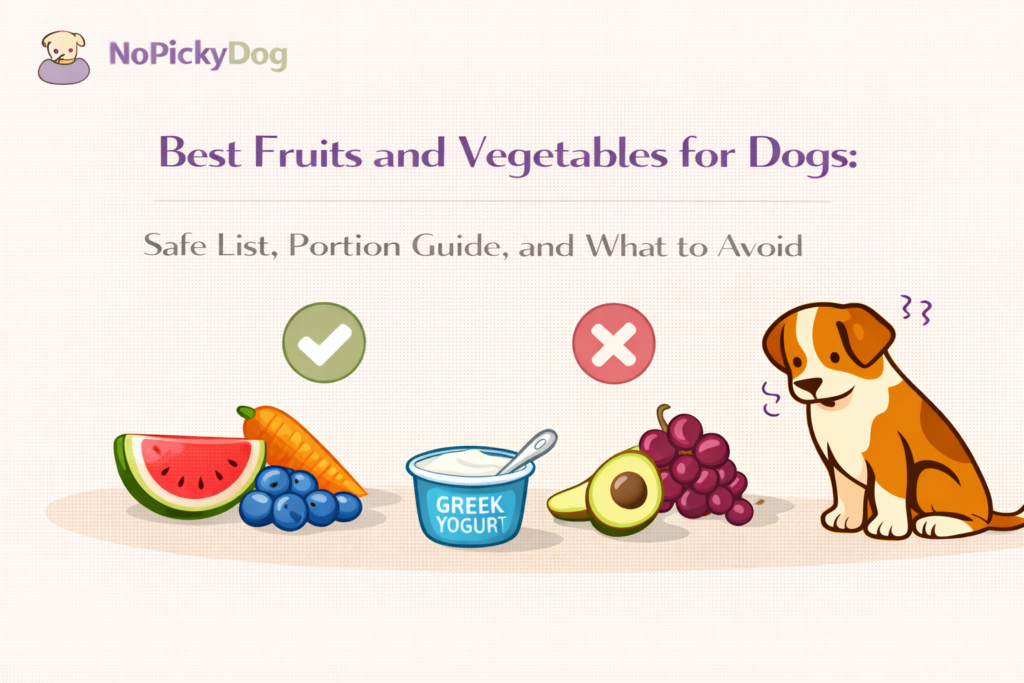
If you’re searching for the best fruits and vegetables for dogs, you probably want three things:
- a safe list you can use today, 2) a simple portion guide, and 3) a clear “do not feed” list (with what to do if it already happened).
Not sure about a specific food right now? Check it in seconds:
Quick answer
Most dogs can eat small, plain servings of certain fruits and vegetables as occasional extras. Start with 1–2 bite-size pieces, then watch for vomiting/diarrhea/gas.
Do not “test” high-risk foods. If your dog ate any of these, treat it as urgent: grapes/raisins, onion/garlic (including powders), or xylitol (sweetener).
Grapes/raisins guide (today steps):
https://nopickydog.com/can-dogs-eat-grapes-or-raisins/
Onion/garlic guide (today steps):
https://nopickydog.com/dog-ate-onion-garlic-what-to-do-today/
Xylitol guide (today steps):
https://nopickydog.com/can-dogs-eat-xylitol/
Steps
1) Use this safe starter list (pick ONE item to start)
Introduce one new food for 2–3 days before adding another—this makes it easy to see what causes stomach upset.
Safer fruits (treat-sized portions)
- Blueberries
- Strawberries
- Banana (thin slices)
- Apple (no seeds, no core)
- Watermelon (seedless, no rind)
Safer vegetables (plain, bite-size)
- Carrots
- Cucumber
- Green beans
- Pumpkin (plain cooked, no spices)
- Sweet potato (cooked, plain)
- Peas (small amounts)
- Broccoli (tiny amounts only—can cause gas)
If the food isn’t on the list, don’t guess—check it:
2) Prep it the dog-safe way (this prevents most problems)
Most problems come from how it’s served, not the fruit/veg itself.
Do this:
- Wash produce well
- Cut into bite-size pieces (choking prevention)
- Remove pits, seeds, cores, rinds, stems
- Serve plain (no salt, butter, oils, sauces, seasoning blends)
Common “gotchas”:
- Onion/garlic powder hidden in cooked foods
- “Sugar-free” products that contain xylitol
- Trail mix / baked goods with raisins
- Peanut butter safety (check for sweeteners): Can Dogs Eat Peanut Butter? Safe Amount + When It’s Not Safe
- Authority list (good quick reference): ASPCA — People Foods to Avoid Feeding Your Pets
3) How much can my dog have? A portion guide that’s easy to follow
The goal: extras stay extras. Too much fruit/veg can cause diarrhea, gas, and can even reinforce picky eating.
Start here:
- Toy/small dogs: 1–2 small pieces
- Medium dogs: 2–4 small pieces
- Large dogs: 4–6 small pieces
Use smaller amounts for richer/starchy options (banana, sweet potato, pumpkin).
If you want a simple way to avoid “accidentally replacing meals,” use the treat cap tools/guides:
- Treat Budget calculator: Treat Budget (10% Rule)
- 10% rule guide: Treats vs Meals: The 10% Rule (Stop Treats From Replacing Dinner)
- AAHA-based explainer (internal): AAHA Treats 10 Percent Rule for Dogs: How to Calculate Treat Calories
4) Foods to avoid (and what to do if it already happened)
These aren’t “maybe” foods—don’t experiment.
Avoid / treat as urgent
- Grapes/raisins (kidney injury risk; unpredictable dose)
- Onion/garlic (can damage red blood cells; signs may be delayed)
- Xylitol (can cause dangerous low blood sugar; sometimes liver injury)
If any of these happened, use the right “today” steps:
- Can Dogs Eat Grapes or Raisins? — What to Do If They Ate Any
- Dog Ate Onion or Garlic? Toxic Amount + What to Do Today
- Can Dogs Eat Xylitol? No—What to Do If They Ate Any (Today)
Authority deep-dive (useful if you’re talking to a vet/ER):
- Merck Veterinary Manual — Garlic and Onion (Allium spp) Toxicosis in Animals
- Merck Veterinary Manual — Xylitol Toxicosis in Dogs
- Cornell Riney Canine Health Center — Grape and Raisin Toxicity
5) If your dog is picky, don’t use fruits/veggies as a “meal replacement”
A common trap: your dog learns “If I refuse kibble, I get better stuff.” That can make picky eating worse.
If you’re using fruits/veggies to “get them to eat,” keep it structured:
- Put meals down for a set time
- Remove the bowl if they refuse
- Keep extras within the treat budget
- Use a plan instead of improvising
- Fix Picky Eating Fast hub: Fix Picky Eating Fast
- 7-day plan (internal): How to Fix a Picky Eater Dog Fast: A 7-Day Plan That Works
Vet red flags
Contact a vet or emergency clinic urgently if your dog:
- Ate grapes/raisins, onion/garlic, or xylitol
- Is repeatedly vomiting, has severe diarrhea, weakness, tremors, collapse
- Has trouble breathing, facial swelling, or widespread hives
- Is a puppy/small dog and may have eaten a meaningful amount
Poison helpline reference (grapes page as example): Pet Poison Helpline: Grapes
Next steps
Pick the path that matches your situation:
- If you want a structured, fast reset for picky eating: Start the 7-day plan.
- If you’re unsure a fruit/vegetable is safe right now: Use the Food Safety Checker first.
- If “healthy extras” are starting to replace meals (or your dog is getting picky): Set a daily limit with Treat Budget.
- If your dog ate grapes or raisins (even one): Follow the today-steps now.
- If your dog ate onion/garlic or seasoned food: Use the emergency plan today.
Related guides
- Can Dogs Eat Grapes or Raisins? (Kidney risk—what to do today)
- Can Dogs Eat Xylitol? No—What to Do If They Ate Any (Today) (Sugar-free danger)
- Dog Ate Onion or Garlic? Toxic Amount + What to Do Today (Hidden seasoning risk)
- Can Dogs Eat Peanut Butter? (Safe amount + xylitol warning)
- Can Dogs Eat Avocados? (Flesh vs. pit safety)
- Treats vs Meals: The 10% Rule (Keep “healthy extras” from replacing meals)
Medical disclaimer
This content is for educational purposes only and does not replace professional veterinary advice, diagnosis, or treatment. If your dog may have eaten something toxic or is showing concerning symptoms, contact a veterinarian or emergency clinic right away.