Intro
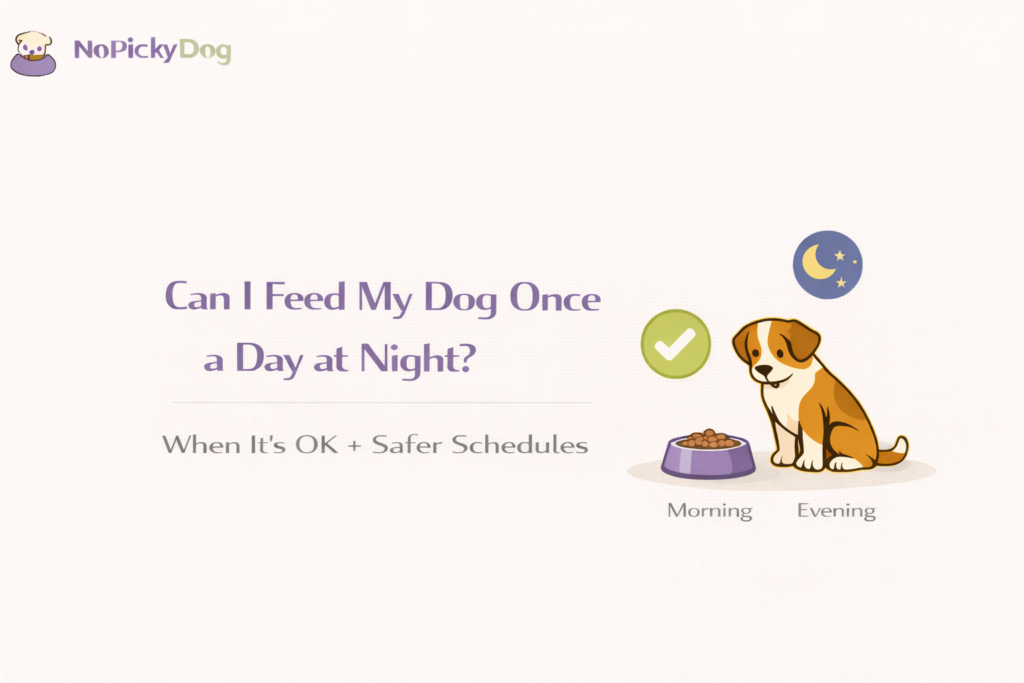
If you’re asking “Can I feed my dog once a day at night?” you’re usually trying to solve one of two problems:
1) Your schedule only allows one main meal, or
2) Your dog “won’t eat” earlier and only seems interested at night.
Once-a-day feeding at night can be OK for some adult dogs—but it’s not a universal best practice. This guide shows when it’s reasonable, when it’s risky, and what schedule fixes picky eating without turning meals into a daily negotiation.
Not sure what to do today? Take the 30-second path:
Not sure what to do today? Take the 30-second path.
Quick answer
Yes—some healthy adult dogs can eat once a day at night, as long as they maintain a healthy body condition, drink normally, and don’t show stomach upset, vomiting, or weight loss.
But once-a-day feeding is a bad idea for many dogs, especially:
- puppies and teen dogs,
- very small breeds,
- dogs with diabetes or other medical issues,
- dogs who vomit bile in the morning,
- dogs who are underweight, losing weight, or have ongoing GI problems.
If your dog is picky and only eats at night, don’t “reward the pattern” with toppers or hand-feeding—fix the routine first:
Dog Picky Eater? Choose the Right Fix (3 Types + What to Do Today)
If you mean a puppy, once-a-day feeding usually isn’t a safe default—use this age-based schedule instead: Can I Feed My Puppy Once a Day?
Steps
Step 1 — Decide if your dog is a “safe candidate” for once-a-day feeding
Once-a-day at night is most reasonable if your dog is:
- a healthy adult,
- at a stable weight (you can feel ribs but not see them),
- not vomiting (especially not yellow bile),
- not showing signs of pain, lethargy, or dehydration,
- not gulping food then regurgitating.
If you’re unsure whether once-a-day is appropriate in general, start here:
Should Dogs Only Eat Once a Day? Is It Cruel? When It’s OK + When to Worry
And if your dog already eats once daily, this explains what’s “normal” vs not:
Dog Eating Once a Day Only? Is It Normal + How to Fix It
Step 2 — Use the safest “night feeding” schedule (and avoid the two common mistakes)
The two mistakes that create picky cycles:
- Grazing all day (the dog never gets hungry for a real meal)
- Treats/chews replacing dinner calories (the dog learns to wait for better options)
A safer once-a-day plan:
- Main meal: evening (pick a consistent time window, e.g., 6–8pm)
- No grazing: food down 10–15 minutes, then pick it up calmly
- No “upgrades at the bowl”: no new toppers, no hand-feeding
- Treat budget: keep treat calories under control
Use this calculator to prevent treats from quietly replacing the meal:
Treat Budget Calculator (10% Rule)
And this guide explains the “treats replacing meals” pattern:
Treats vs Meals: The 10% Rule (Stop Treats From Replacing Dinner)
Step 3 — Make sure you’re not overfeeding (most “night-only eaters” aren’t hungry earlier)
Many owners think the dog is picky, but the dog is simply not hungry due to:
- too many treats,
- too large a daily portion,
- free-feeding/grazing.
Start here to get the portion right:
Portion Basics: How Much to Feed a Picky Dog (Without Guessing)
Then convert calories into cups/grams you can actually measure:
Portion Converter (kcal → cups/grams)
Step 4 — If “once-a-day at night” is causing morning bile vomiting, change the plan
Some dogs get stomach irritation and vomit yellow bile when the stomach is empty too long. If you see morning bile vomiting, don’t force once-a-day feeding.
Two safer options:
- Option A (2 meals/day): split the daily amount into morning + evening
- Option B (small AM, big PM): 20–30% in the morning, 70–80% at night
If your dog refuses breakfast but eats dinner, use this routine guide:
Dog Won’t Eat Breakfast but Eats Dinner? Is It Normal + What to Do
Step 5 — Run a 7-day “consistency reset” if picky behavior is the real issue
If your dog learned “refuse → get something better,” you need a short reset that removes upgrades and restores predictable mealtimes.
Follow this:
How to Fix a Picky Eater Dog Fast: A 7-Day Plan That Works
Vet red flags
Call a vet today if you see:
- repeated vomiting or vomiting + weakness
- refusal to drink water or dehydration signs (very dry gums, extreme lethargy)
- bloated belly, repeated retching, obvious abdominal pain
- black/tarry stool, blood in stool or vomit
- rapid weight loss, collapse, trouble breathing
- your dog won’t eat for 24 hours and seems unwell
If your dog isn’t eating but still acting normal, use this checklist before changing foods:
Dog Not Eating But Acting Normal? 11 Common Causes + What to Do
Helpful vet reference on appetite loss:
VCA: Anorexia in Dogs
Next steps
Pick the path that matches your situation:
- I want to keep once-a-day feeding, but do it safely →
Best Time to Feed a Dog Once a Day (Morning vs Night) + Is It Cruel - My dog refuses breakfast but eats later →
Dog Won’t Eat Breakfast but Eats Dinner? Is It Normal + What to Do - I think treats are ruining meals →
Treat Budget Calculator (10% Rule)
Treats vs Meals: The 10% Rule (Stop Treats From Replacing Dinner) - I’m not sure what’s causing the pickiness →
Dog Picky Eater? Choose the Right Fix (3 Types + What to Do Today)
Medical disclaimer: This content is for general education and does not replace veterinary diagnosis or treatment. If your dog seems sick, is in pain, ate something toxic, or you’re worried, contact your veterinarian or an emergency clinic.
Related guides
- Best Time to Feed a Dog Once a Day (Morning vs Night) + Is It Cruel
- Should Dogs Only Eat Once a Day? Is It Cruel? When It’s OK + When to Worry
- Dog Eating Once a Day Only? Is It Normal + How to Fix It
- Dog Won’t Eat Breakfast but Eats Dinner? Is It Normal + What to Do
- Portion Basics: How Much to Feed a Picky Dog (Without Guessing)
- Treats vs Meals: The 10% Rule (Stop Treats From Replacing Dinner)