It is creamy, cool, and packed with probiotics. Many vets even recommend it for settling an upset stomach.
But the yogurt aisle is confusing. Between “Greek,” “Low-Fat,” “Fruit-on-the-Bottom,” and “Sugar-Free,” there is a massive difference in safety. One type is a superfood; another could send your dog to the ER.
Here is how to navigate the dairy aisle without making a fatal mistake.
Quick Answer
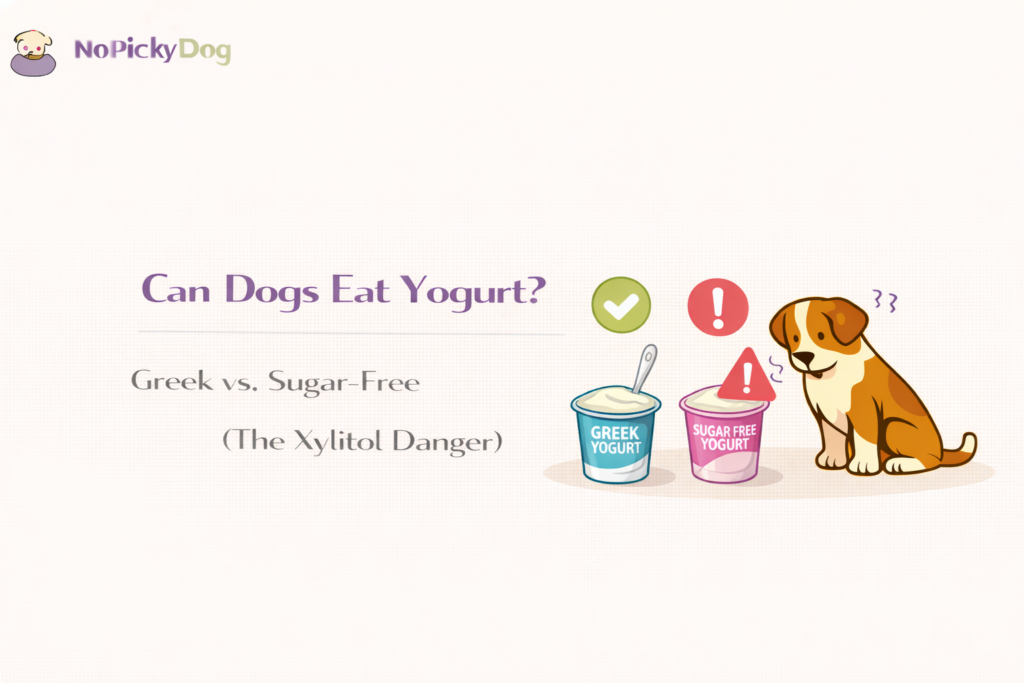
Yes, dogs can eat Plain, Unsweetened Yogurt (especially Greek). It is a great source of calcium and probiotics (good bacteria) that can help with digestion.
NO, do NOT feed “Sugar-Free” or “Low-Calorie” Yogurt. Many of these are sweetened with Xylitol (Birch Sugar), which is highly toxic to dogs. Even a small cup can cause life-threatening hypoglycemia and liver failure.
Step 1: The “Xylitol” Check (Critical)
Before you open the lid, flip the cup over. Scan the ingredients list for these words:
- Xylitol
- Birch Sugar (The new name for Xylitol)
- Artificial Sweeteners (Aspartame, etc. – not toxic like Xylitol, but bad for gut health).
Rule of Thumb: If it says “Diet,” “Lite,” or “Sugar-Free,” keep it away from your dog unless you are 100% sure.
Step 2: Greek vs. Regular (Why Greek Wins)
If you have a choice, choose Greek Yogurt.
- Lower Lactose: The straining process removes much of the whey (and lactose), making it easier for dogs to digest.
- Higher Protein: It has double the protein of regular yogurt, making it a better topper for picky eaters.
- Thicker Texture: Great for stuffing into toys (like Kongs) and freezing.
Step 3: How to Use It for Gut Health
Yogurt is a functional food. If your dog has loose stool or “morning bile” (yellow foam), a tablespoon of yogurt can help soothe the stomach lining.
- The Dose: 1 teaspoon for small dogs, 1-2 tablespoons for large dogs.
- The Test: Start small. Some dogs are strictly lactose intolerant and will get gas/diarrhea from any dairy.
Next steps
Pick the path that matches your situation:
- If your dog ate “Sugar-Free” yogurt (Check for Xylitol): Read the Xylitol Emergency Guide Immediately
- If you want to use Yogurt to fix “Yellow Vomit”: Read the Guide on Hunger Pukes (Bile)
- If you want other safe human food toppings: Can Dogs Eat Eggs? Raw vs. Cooked
Medical disclaimer: This content is for informational purposes only and does not replace professional veterinary advice.