Looking for 2 ingredient dog treats that won’t upset your dog’s stomach—or accidentally replace dinner?
This guide gives you simple, safe combos, the portion rules that prevent overfeeding, and the ingredient traps (like xylitol) to avoid.
Before you make any treats, set the daily treat “cap” so treats don’t become meals:
Quick answer
The safest 2-ingredient dog treats are plain, low-sugar, and no-seasoning. Start with tiny portions, introduce one new ingredient at a time, and keep treats within the 10% rule.
If you’re ever unsure whether an ingredient is safe, check it first:
Steps
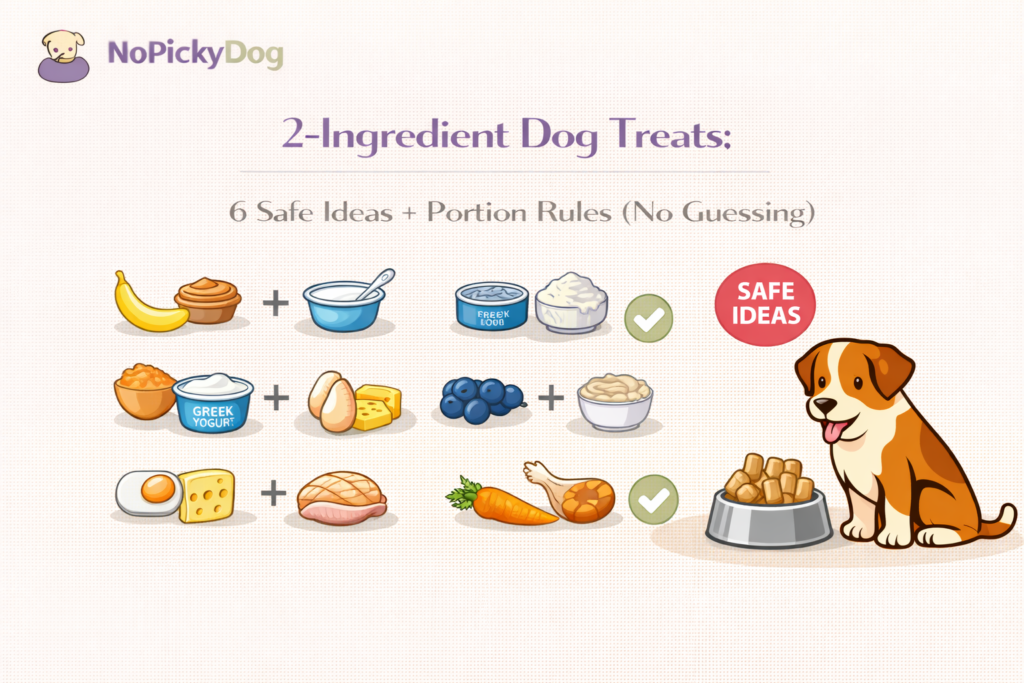
Step 1) Use these 6 safe 2-ingredient ideas (choose ONE to start)
Pick one idea for 2–3 days before trying another.
- Pumpkin + Plain Greek Yogurt (freeze into small dots)
- Banana + Oats (mix and bake low/slow or freeze as small bites)
- Apple (no seeds) + Plain Yogurt (tiny cubes + light coating)
- Sweet Potato + Egg (bake into mini bites)
- Sardines in water + Pumpkin (tiny training bites; strong smell = picky-dog magnet)
- Carrot + Peanut Butter (xylitol-free) (very small smear only)
If you plan to use peanut butter, label-check is non-negotiable:
Can Dogs Eat Peanut Butter? Safe Amount + When It’s Not Safe
Step 2) Prep rules (the “boring” part that prevents most problems)
- No salt, garlic powder, onion powder, butter, oils, or spice blends
- Cut into pea-size for small dogs; bean-size for medium; thumbnail-size for large
- Avoid sticky chunks (choking risk) and hard brittle pieces (tooth risk)
- Introduce new treats when your dog is otherwise doing well (not during active diarrhea)
If you’re unsure about a spice, sweetener, or “sugar-free” label, check it:
Step 3) Portion rules (so treats don’t replace meals)
Use this as your default “first dose”:
- Small dogs: 1–2 tiny pieces
- Medium dogs: 2–4 tiny pieces
- Large dogs: 4–6 tiny pieces
Then adjust based on stool. Soft stool = cut the amount in half, or stop and retry later.
For the overall limit, follow the 10% rule and keep treat calories from piling up:
- Treats vs Meals: The 10% Rule (Stop Treats From Replacing Dinner)
- AAHA Treats 10 Percent Rule for Dogs: How to Calculate Treat Calories
Step 4) Storage rules (to avoid foodborne messes)
- Fridge: 2–3 days for homemade moist treats
- Freezer: 2–3 months (label with date)
- Toss if you see mold, smell “off,” or your dog gets GI upset after a new batch
Step 5) Ingredient traps (avoid these completely)
These are not “maybe” ingredients—don’t experiment:
- Xylitol (sweetener; can be life-threatening)
- Grapes/raisins
- Onion/garlic (including powders)
If any of these were eaten, use the “today” steps:
Can Dogs Eat Xylitol? No—What to Do If They Ate Any (Today)
Can Dogs Eat Grapes or Raisins? — What to Do If They Ate Any
Dog Ate Onion or Garlic? Toxic Amount + What to Do Today
Authority references (good to link once for credibility):
Merck Veterinary Manual — Xylitol Toxicosis in Dogs
ASPCA — People Foods to Avoid Feeding Your Pets
Vet red flags
Call a vet or emergency clinic if your dog:
- Ate xylitol, grapes/raisins, or onion/garlic
- Has repeated vomiting/diarrhea, severe lethargy, tremors, collapse
- Has trouble breathing, swelling, or hives
- Is a puppy or very small dog and may have eaten a meaningful amount
Next steps
Pick the path that matches your situation:
- If you want a hard daily limit so treats don’t replace meals: use the treat calculator.
Treat Budget (Calculator) - If your dog ignores kibble but works for treats: fix the pattern before adding new treats.
Dog Won’t Eat Kibble but Eats Treats? Fix It (7-Step Plan) - If you’re not sure an ingredient is safe (spices, sweeteners, “sugar-free” labels): check it first.
Food Safety Checker - If your dog is getting pickier after “fun snacks”: start a structured reset.
How to Fix a Picky Eater Dog Fast: A 7-Day Plan That Works
Related guides
Can Dogs Eat Eggs? Raw vs. Cooked + Are Shells Safe?
Can Dogs Eat Yogurt? Greek vs. Sugar-Free (The Xylitol Danger)
Medical disclaimer
This content is for educational purposes only and does not replace professional veterinary advice, diagnosis, or treatment. If your dog may have eaten something toxic or is showing concerning symptoms, contact a veterinarian or emergency clinic right away.