Eggs are nature’s multivitamin. They are cheap, easy to prepare, and packed with protein.
But look online, and you will find a fierce debate: Should you feed them raw like a wolf, or cooked like a human?
Here is the science-backed breakdown on shells, yolks, and the Salmonella risk.
Quick Answer
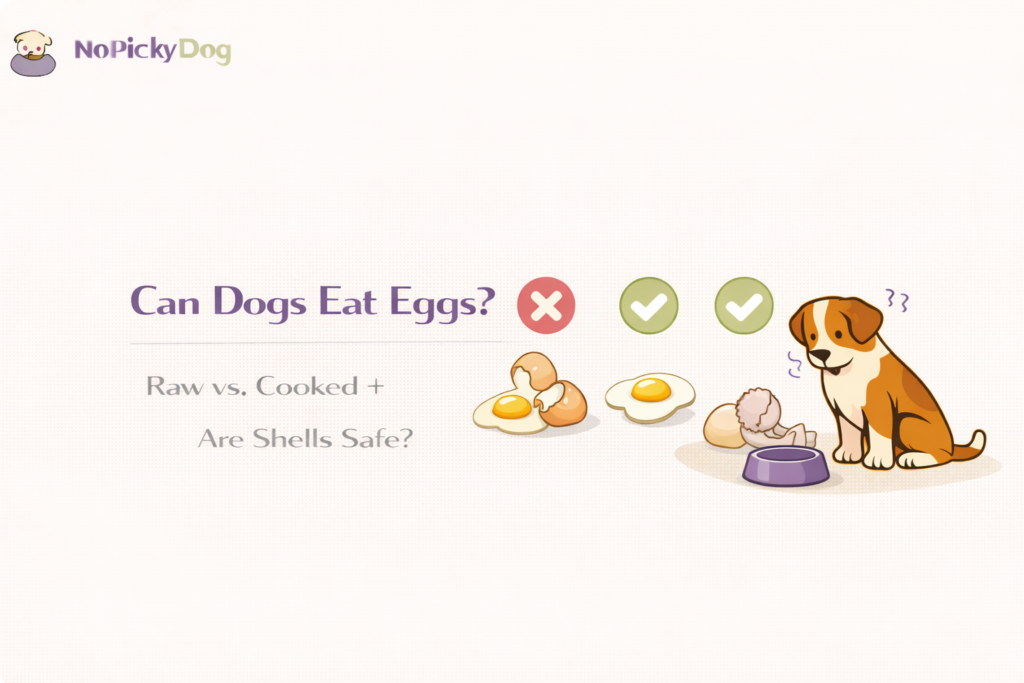
Yes, dogs can eat eggs, and they are excellent for them. However, Cooked is safer than Raw.
- The Benefits: High in Linoleic Acid (for skin and coat) and high-quality protein.
- The Verdict: Scrambled or hard-boiled eggs are the safest, most digestible option.
Step 1: The Raw Egg Debate (Salmonella & Biotin)
Advocates of raw feeding love raw eggs, but there are two risks you must know:
- Salmonella: Just like for humans, raw eggs can carry Salmonella. While dogs have stronger stomach acid than us, they can still get sick, and more importantly, they can pass the bacteria to you through their saliva (licks).
- Biotin Deficiency: Raw egg whites contain Avidin, an enzyme that blocks the absorption of Biotin (Vitamin B7).
- Reality Check: You would have to feed a huge amount of raw egg whites to cause a deficiency, but cooking destroys Avidin completely.
Step 2: Can They Eat the Shells?
Yes, eggshells are a great source of Calcium. But don’t just throw a whole egg to a small dog (choking hazard).
- How to serve: Dry the shells out and grind them into a fine powder. Sprinkle a teaspoon over their food.
- Why? It is a natural calcium boost, especially for dogs on homemade diets.
Step 3: Eggs for Picky Eaters
Eggs are a “Top Tier” topper. If your dog is refusing their kibble, cracking a hard-boiled egg over the bowl is often enough to trigger their appetite.
- Warning: Don’t use butter, salt, or pepper when cooking for your dog. Plain is best.
Next steps
Pick the path that matches your situation:
- If you want to add eggs to fix a picky eater: See the 7-Day Reset Plan
- If your dog ate raw eggs and is vomiting: Check the Food Safety Checker
- Looking for other healthy human foods? Can Dogs Eat Cheese? (Safe Types)
Medical disclaimer: This content is for informational purposes only and does not replace professional veterinary advice.